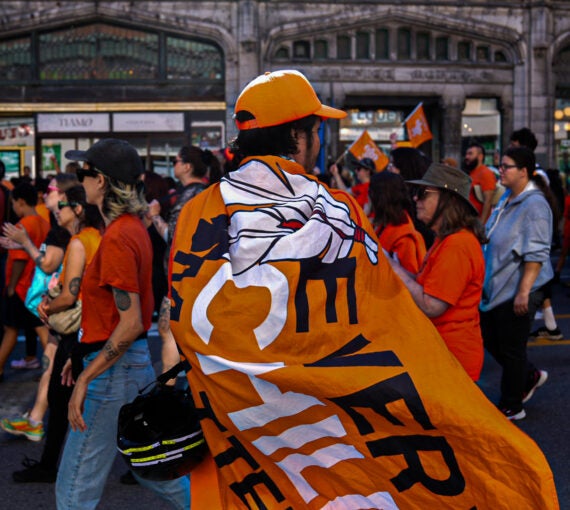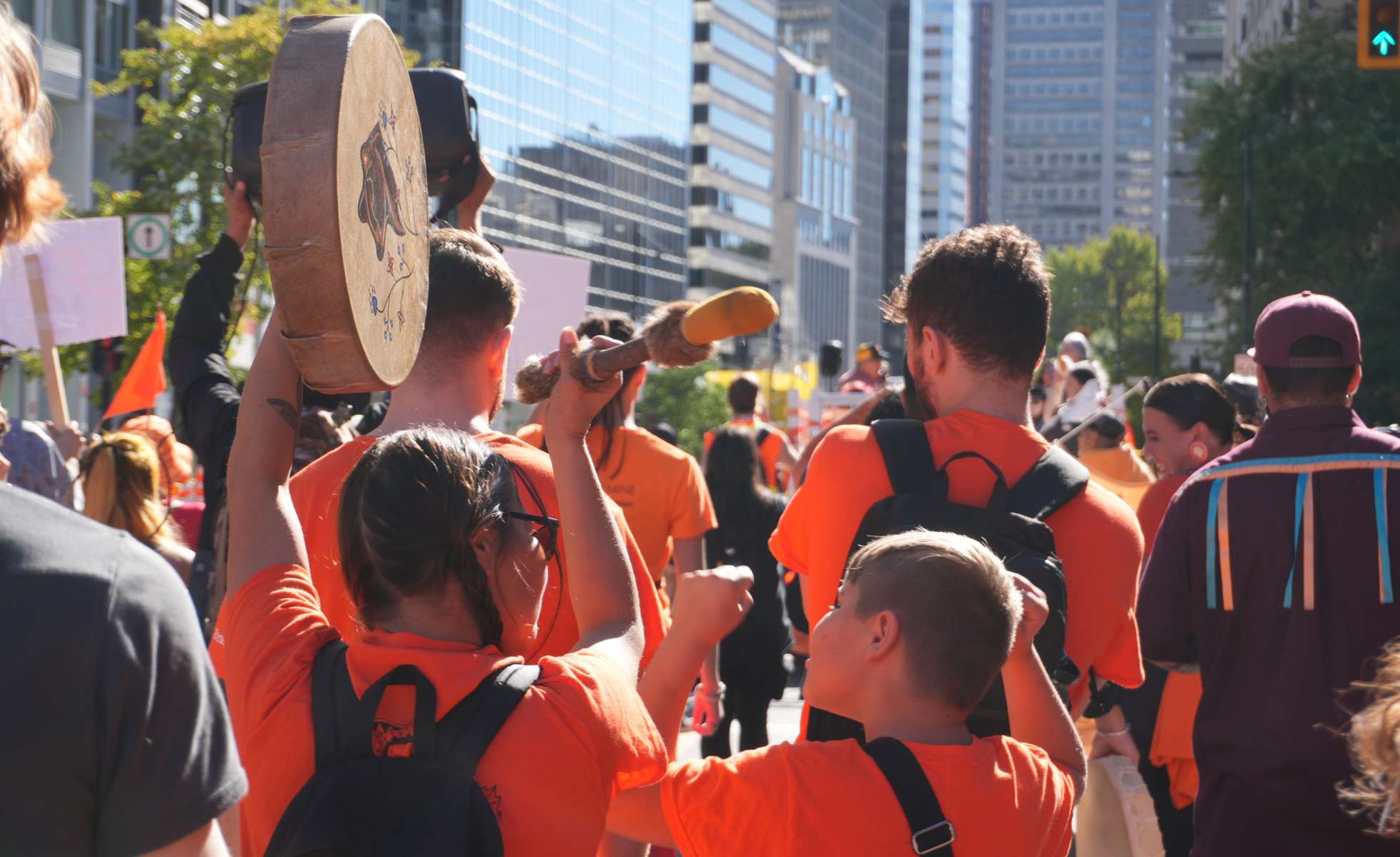
Picture taken during the Tiohtià:ke/Mooniyang/Montréal Every Child Matters March in 2025 (Photo: Laurence Bolduc via DSF)
We all carry a story of what could have been.
For First Nations, Inuit and Métis Peoples, there has never been a time when we have not spoken about who we, our families and our communities might have been if not for Canada’s colonial legacy and the projects designed to sever our relationships to land, water, culture and language.
These projects include the Indian Act, which outlawed cultural practices such as the Potlatch and Sundance, imposed political control over First Nations and, most critically, regulated Indigenous lands. They include the creation of the Indian residential school system, designed to assimilate Indigenous children. As then deputy superintendent of the Department of Indian Affairs Duncan Campbell Scott stated plainly, “I want to get rid of the Indian problem … to continue until there is not a single Indian in Canada that has not been absorbed into the body politic, and there is no Indian question, and no Indian Department.”
The residential school system was fundamentally a land policy. Its purpose was to facilitate settler access to Indigenous lands by dismantling Indigenous nations. By removing children from their families, languages and governance systems, the Canadian state sought to sever intergenerational relationships to land. Education was the mechanism; land dispossession was the objective.
Education was the mechanism; land dispossession was the objective.
If one were to map colonial violence against Indigenous Peoples on a timeline, it would span more than 500 years. The Indian Act laid the legislative foundation for systemic harms that followed, including the Sixties Scoop and qimmiijaqtauniq — the mass killing of Inuit sled dogs.
This violence is not confined to the past. It persists today through projects such as the Coastal GasLink pipeline, imposed through Wet’suwet’en territory, the environmental racism faced by communities in Northern Alberta’s Athabasca region and the conditions experienced by Aamjiwnaang First Nation within what is known as “Chemical Valley.”
The residential school system operated for over 150 years, with the last school closing just 29 years ago, in 1997. These closures did not mark the end of the colonial project; they marked its modernization. The same logic continues through resource extraction imposed without free, prior and informed consent, and through environmental racism and the ongoing criminalization of Indigenous land defenders. The form has changed, but the objective — access to land — remains.
The Truth and Reconciliation Commission of Canada was established through the Indian Residential Schools Settlement Agreement, officially launching on June 2, 2008. In 2015, the commission released its final report and 94 Calls to Action, exposing the residential school system as a site of cultural genocide, crimes against humanity and extensive human rights violations.
The residential school system operated for over 150 years, with the last school closing just 29 years ago, in 1997. These closures did not mark the end of the colonial project; they marked its modernization.
On May 28, 2021, Tk’emlúps te Secwépemc First Nation announced the discovery of the potential remains of 200 children in unmarked graves at the former Kamloops Indian Residential School. This announcement ignited national mourning, outrage and renewed investigations throughout the country.
In response, the National Advisory Committee on Residential Schools Missing Children and Unmarked Burials was established, co-administered by the National Centre for Truth and Reconciliation and Crown-Indigenous Relations and Northern Affairs Canada. As of March 2025, the federal government has discontinued funding and ceased the committee’s operations — less than three years after its creation and 10 years after the release of the TRC’s Calls to Action.
On October 24, 2024, the Native Women’s Shelter of Montreal, in partnership with Amnistie Internationale Canada Francophone, announced they would host a Permanent Peoples’ Tribunal on Missing Indigenous Children and Unmarked Graves in Canada, an urgent international effort to demand accountability for crimes committed against Indigenous children in Canada’s residential school system.
Na’kuset, executive director of NWSM, has been a driving force behind the tribunal. The idea emerged from a single, pointed question.
A Cree woman adopted into a Jewish family as a child, Na’kuset has witnessed the impacts of genocide through both of her identities. Following the announcement of the potential remains of children in Tk’emlúps, she encountered a tweet by filmmaker Alethea Arnaquq-Baril asking, “When do we get our own Nuremberg trial?” Na’kuset has said that in that moment, “a lightbulb went off.”
She began meeting with Jewish organizations and community groups to understand how the Nuremberg Trials were organized and how accountability was pursued. That question continued to guide her work. On December 6, 2022, during the COP15 biodiversity summit in Montreal, she posed it directly to Agnès Callamard, secretary general of Amnesty International:
“What is the closest thing to a Nuremberg trial that could be held to bring accountability for the mass graves at residential schools?”
It was then that Amnesty International and NWSM committed to partnering to convene a Permanent Peoples’ Tribunal. While the initial proposal focused on Quebec, concerns about fragmentation, and guidance from Kimberly Murray, a lawyer and expert witness for the tribunal, led to the decision to expand its scope to address violations throughout Canada.
In the lead-up to the tribunal in May 2026, people across disciplines, communities and generations are working together to hold Canada accountable. Technical workers, international human rights lawyers and professors from Université Laval and UQAM are drafting the indictment. Aboriginal Legal Services and JFK Law are partners in this work, with Sara Mainville and a team of six Indigenous lawyers finalizing the case. Christa Big Canoe will serve as lead prosecutor.
Survivors and Elders are at the heart of this process. Through an advisory committee, they are guiding decision-making and ensuring the tribunal remains accountable to those who endured the violence of the residential school system and those who continue to live with its consequences. This work is sustained through solidarity and support from organizations including the Future Generations Foundation, the McConnell Foundation, the Beati Foundation and the David Suzuki Foundation.
Together, these efforts seek justice for more than 150,000 First Nations, Inuit and Métis children who were taken from their families, their languages and their lands — many of whom never made it home.
The Ancestors remain with us, walking alongside survivors, Elders, youth, lawyers and advocates — those who refuse silence and continue to demand truth, justice and accountability.
The residential school system targeted children precisely because they carry land-based relationships, laws, responsibilities and stories. The goal was to break those bonds. That project failed. Our dances, songs, ceremonies and stories endure. The Ancestors remain with us, walking alongside survivors, Elders, youth, lawyers and advocates — those who refuse silence and continue to demand truth, justice and accountability.
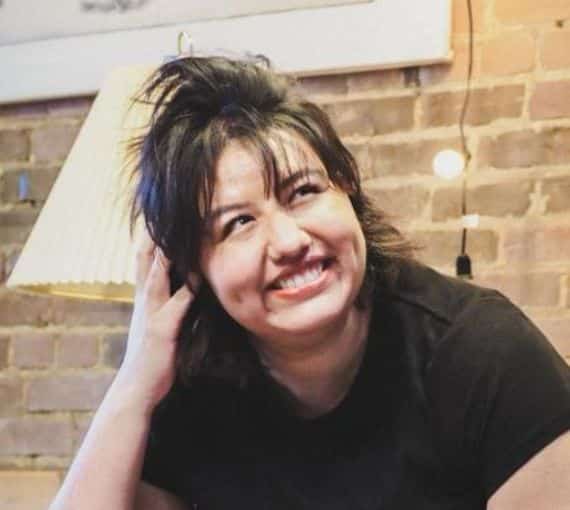
Skw'akw'as (Sunshine) Dunstan-Moore, Indigenous Climate Advocate and Indigenous Projects Manager with Finance Engage Sustain
Skw’akw’as (Sunshine) Dunstan-Moore (she/her) is Nlaka’pamux, Stl’atl’imx and Yakama from Tlekemstin (Lytton), B.C. A Global Law student at Carleton, she has five-plus years in climate policy, chaired ECCC’s Youth Council (2022–24), served on UNESCO’s Youth Advisory Group, co-chaired Y7 Peace & Security and manages Indigenous projects at Finance Engage Sustain.