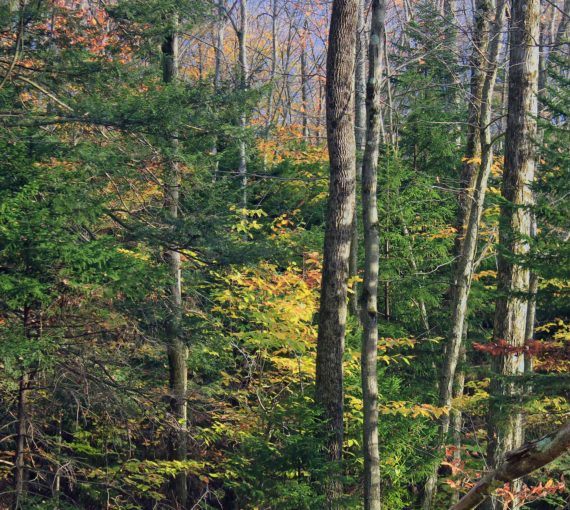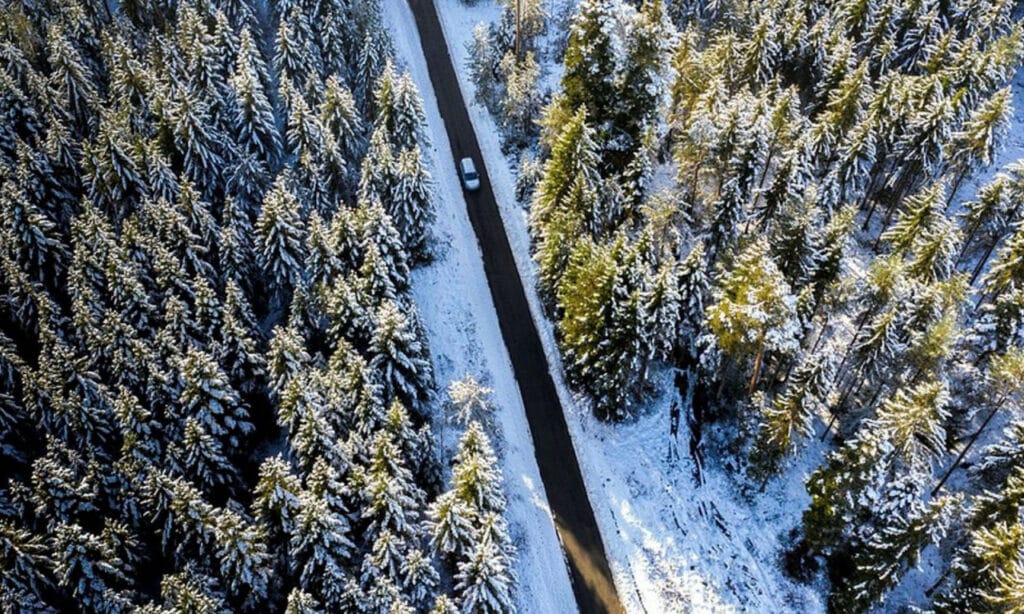
As is, the government’s ‘investment budget’ leaves a nature deficit, which chips away at the foundation of a strong Canada. We must repair the harms caused by our collective actions. Happily, nature’s regenerative arc compounds investments.
Canada’s 2 Billion Trees program, axed in the federal budget on Nov. 4, garnered heat from all sides: opposing political parties, the federal auditor general, and even conservation organizations.
Although 2BT was often portrayed as questionable, its roots were solid. It was consistent with the global pledge reached at the United Nations Biodiversity Conference in Montreal in 2022 to halt and reverse nature loss, and the commitment of 144 countries, including Canada, under the 2021 Glasgow Leaders’ Declaration on Forests and Land Use to halt deforestation (conversion of forests to another land use) and forest degradation by 2030.
Canada has low deforestation rates, although it doesn’t account for logging roads in its tally. (Sometimes logging roads are decommissioned, but usually they are not. According to CBC News, Canada has more than 1.5-million kilometres of logging and resource access roads, almost enough to circle our planet 37 times.)
Industrial logging and other resource extraction impacts (such as seismic lines, wells, and mines) have extensively degraded forests throughout Canada
But industrial logging and other resource extraction impacts (such as seismic lines, wells, and mines) have extensively degraded forests throughout Canada, and driven forest-dwelling species that depend on mature, unfragmented forests—such as the boreal woodland caribou, an umbrella species—toward extinction. Caribou and many other species will not recover without significant habitat restoration at the landscape level.
The 2BT initiative was also on point as trees offer a great long-game strategy for combatting climate change. They sequester carbon when they grow, and store carbon when they’re old. (Industrial logging, on the other hand, has been identified as this country’s third-largest contributor to greenhouse gas emissions.)
Canada is not alone in advancing tree-planting as a restoration engine. Kenya launched a program to achieve the target of 15 billion trees by 2032, Pakistan has a Plant for Pakistan project aiming to plant 10 billion trees from 2018 to 2023, and China has announced that it aims to plant and conserve 70 billion trees by 2030.
That said, the 2BT program faced challenges, some significant. As the federal auditor general noted in 2023, the program did not require tree permanence—the commitment for managers to steward trees to old age, if possible. This cleared the way for future logging. The program also failed to incorporate a long-term monitoring program. Although it asked applicants to provide monitoring plans, it didn’t include a monitoring standard.
Further, the auditor general found that “in the 2021 planting season, Natural Resources Canada funded more than 270 monoculture sites (that is, sites with plantings of only one species), covering 3,136 hectares. Of these sites, 78 had more than 10,000 trees.”
Monoculture planting, often practised by forestry companies after logging, is a form of forest degradation. Monocultures degrade forest health and resilience, and reduce habitat quality for many forest-dependent species.
Where to, now that the program is cancelled and nature not mentioned in the budget?
To start, a national restoration vision is needed, one that acknowledges forest degradation and deforestation from resource-extraction practices, incorporates habitat needs of at-risk species, maps priority restoration areas and supports and integrates Indigenous leadership.
As is the case on many other conservation fronts, Indigenous stewardship, which supports natural regeneration, is leading the way towards real ecological repair in contrast to standard industry and government-led practices, which, in most contexts, are grossly insufficient—if they occur at all.
Examples of Indigenous leadership abound. Saulteau First Nations is collaborating on reclamation trials to determine best practices for restoring caribou habitat using lichen transplants.
Blueberry River First Nations have written about “reciprocal restoration” at the landscape scale, which focuses on “the enhancement, creation, or re-creation of habitats that aims to restore the environment, as well as Indigenous human relationships with the land. End goals for reciprocal restoration place emphasis on the revitalization of ecosystems and cultural practices; in other words, returning relationships between the environment and people to what they were prior to disturbance.”
Fort Nelson First Nation has restored former oil and gas industry sites to their natural state “using ecologically suitable and culturally appropriate restoration techniques.”
As is, the government’s “investment budget” leaves a nature deficit, which chips away at the foundation of a strong Canada. We must repair the harms caused by our collective actions. Happily, nature leans toward propagation if we commit to creating the space for it to flourish. Nature’s regenerative arc compounds investments.
This op-ed was originally published in the Hill Times.

Our work
Always grounded in sound evidence, the David Suzuki Foundation empowers people to take action in their communities on the environmental challenges we collectively face.