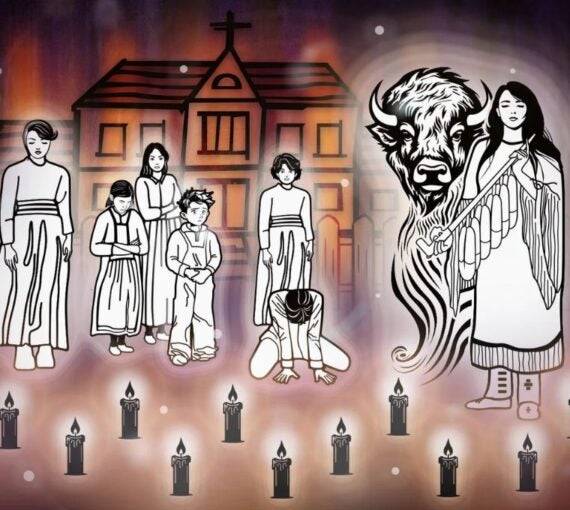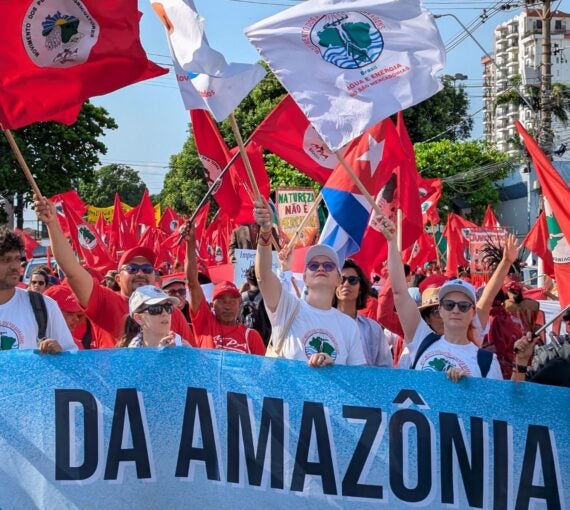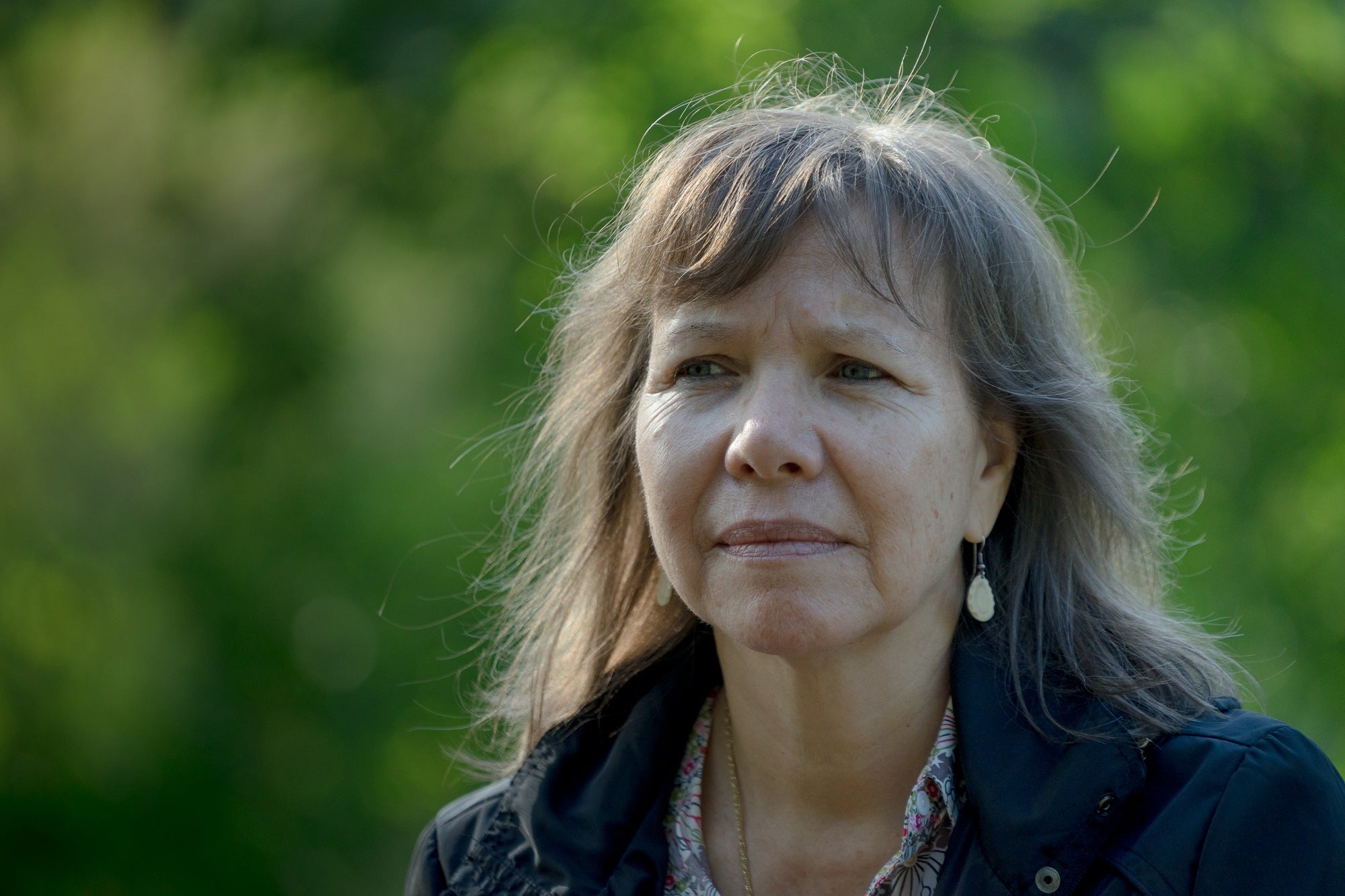
Katsi’tsakwas Ellen Gabriel, Indigenous Human Rights and Environmental Activist. (Photo: Alan Lissner)
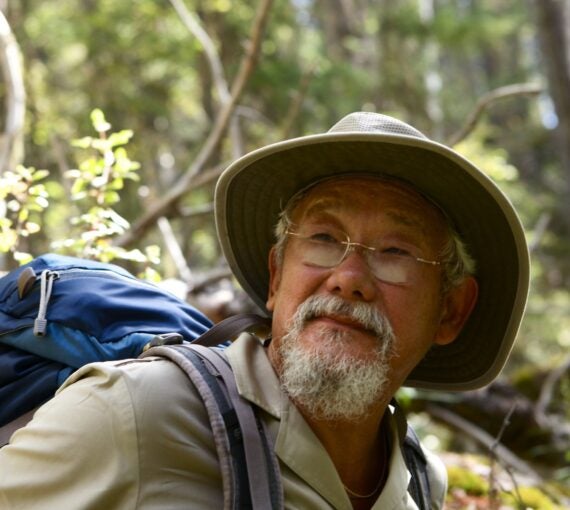
“As a scientist, I have spent my career studying the living world and its capacity to absorb the impacts of human technology and activity and the limits of planetary resilience. Time and time again, I have observed a precise alignment between what Indigenous knowledge has articulated over millennia and what empirical evidence has repeatedly confirmed through ecology, climate science and public health research: that human health, social equity and ecological integrity are inseparable. Decision-making rooted in long-term stewardship reflects the most rigorous scientific understanding of sustainability.
Far from standing in opposition to science, Indigenous land and water stewardship represents its most coherent expression: an integrated, systems-based view of our planet that acknowledges responsibility toward all species and future generations. To ignore these insights is not progress, it is a rejection of both evidence and wisdom at a moment when humanity cannot afford to ignore either.”
– David Suzuki
Humankind has not been respectful to Mother Earth. It is evident with the natural catastrophes over the past few decades that we are paying the price for our disrespect.
Many scientists have called the time we are living in the Anthropocene: human activities are now the prime factor shaping every aspect of the natural world, threatening the very survival of all life. The extinction of hundreds of species every year and the loss of biodiversity are results of the careless decisions of corporate-controlled governments.
This carelessness is only getting worse. The quest to obtain all the rare earth minerals in existence is supposedly meant to elevate our lives through new technology, but it has devastating consequences for ecosystems. While artificial intelligence has benefited everything from health to construction, its rampant use consumes vast amounts of energy and water.
Certain technologies are touted as being “green energy.”
But our methods of capturing and extracting that green energy have carbon costs, and we need to develop methods and technologies with the lowest carbon costs from cradle to grave.
All life has a carbon footprint as we are constructed from carbon. Since life feeds on life, carbon is cycled through life forms. Humans capture more and more of that carbon and liberate far more than nature’s capacity to recycle it, thereby creating an imbalance.
All life has a carbon footprint as we are constructed from carbon. Since life feeds on life, carbon is cycled through life forms. Humans capture more and more of that carbon and liberate far more than nature’s capacity to recycle it, thereby creating an imbalance.
If you track the whole life cycle of technologies, from mining rare earth minerals to end uses of electric batteries, you see that nature recycles everything, but we overshoot its ability to maintain a balance. So we are stuck with choosing something less destructive than that which is hazardous to all life.
Over tens of thousands of years, humans moved across the planet, occupying new ecosystems and learning from the observations, failures, mistakes and successes of their ancestors to eventually live in place. This has been the heart of Indigenous cultures.
For multiple generations, around the world, European nations have oppressed and colonized Indigenous Peoples and plundered their homelands for resources.
Indigenous communities have been on the front lines of protecting the environment and planet. The philosophies and cultures of most Indigenous Peoples are built around the understanding that humans are inextricably linked to the natural world through the air, water and soil. All human rights are interconnected, interrelated and indivisible, and as Indigenous perspectives recognize, our health is intricately connected to Earth’s health.
The philosophies and cultures of most Indigenous Peoples are built around the understanding that humans are inextricably linked to the natural world through the air, water and soil.
It is a spiritual relationship, one in which we have obligations to protect Mother Earth and all our relations. We must include their needs in all our decisions.
From scientific research to Indigenous traditional knowledge, we find sustainable solutions to the challenges of the climate crisis. Nevertheless, the rise of fascism’s stifling logic and threat to human rights is causing a regression from all the positive accomplishments of the past seven decades.
For too long, Indigenous rights-holders have been subjected to racist ideologies founded on the Doctrine of Discovery and terra nullius, which is akin to living under an authoritarian decision-making regime. For decades, governments have told Indigenous Peoples that our rights do not apply when projects are in the “national interest.” This labelling is nothing new to us. It’s the same old colonial relationship of might is right.
While the rest of society panics about the rise of fascism, Indigenous Peoples see the current situation as cyclical. We find ourselves in a familiar place of threats to the full enjoyment of our rights as land dispossession under the guise of “national interest” persists in the name of Canada’s economic prosperity.
On June 21, 2023, Canada’s Parliament passed domestic legislation to implement the United Nations Declaration on the Rights of Indigenous Peoples. It was a major accomplishment in the recognition of Indigenous human rights, including the right to self-determination. The declaration, and the legislation to implement its provisions in Canada, did not create new rights but instead validated the rights we have always had but which were violated by colonial laws.
Yet, just two years after making this legal commitment to upholding our right to self-determination, Prime Minister Mark Carney’s government passed Bill C-5, legislation to allow fast-tracking of large-scale resource development projects.
In the rush to pass Bill C-5, Canada did not conduct proper consultations, did not cooperate with Indigenous Peoples in developing the legislation and did not obtain their free, prior and informed consent. Canada gave select Indigenous leaders one week to look over the bill’s contents and make comments. This fails to meet the requirements of Canada’s Constitution Act 1982, the UN declaration and the legislation for implementing it.
Bill C-5 is a reiteration of the racist ideologies that created so much harm to Indigenous Peoples and Mother Earth through land dispossession and attacks on our teachings, languages and governance.
Bill C-5 is a reiteration of the racist ideologies that created so much harm to Indigenous Peoples and Mother Earth through land dispossession and attacks on our teachings, languages and governance.
Like former Prime Minister Stephen Harper’s omnibus bill, this bill’s exclusion of Indigenous Peoples’ rights to self-determination signifies that we remain under the tutelage of Canada. It is the colonizer who decides who will sit at the negotiating table.
History offers a clear lesson about who is likely to be at the table and who isn’t.
Canada’s imposed band council system and the weaponization of religion were used to divide Indigenous Peoples to pilfer our homelands. Colonial-created entities are not answerable to the people of the nation but to the federal government. Their role: Indigenous Peoples’ acceptance of the rape and plundering of our homelands.
The adopted Bill C-5 promotes further careless resource development in the name of the “national interest.” This argument is not new. It has remained part of the legal fictions of Canada’s imposition of colonial laws to justify violence inflicted upon Indigenous Peoples who oppose various forms of development.
Indigenous Peoples have always been violable, dispensable and expendable in the colonizers’ eyes.
Indigenous Peoples have always been violable, dispensable and expendable in the colonizers’ eyes. Utilizing the Doctrine of Discovery, the Catholic Church created a legal fiction to justify land dispossession of Indigenous Peoples.
Although the UNDRIP was absorbed into Canadian law under CANDRIP in June 2023, the actions of Canada and its provinces are evidence that the Doctrine of Discovery and terra nullius are veiled under Bill C-5.
While the world walks on eggshells around threats from the world’s most powerful military, Canada, like other states, is scrambling to insert its influence on the world stage. But, like all colonizers, it’s with a view of Earth as something to exploit and plunder. Meanwhile, Indigenous Peoples continue the struggle to protect Mother Earth — which has helped us survive the brutality and dehumanization of colonization.
This moment of rupture offers an opportunity for dramatic change.
This moment of rupture offers an opportunity for dramatic change. Instead, a world order of “peace through might” continues to expand, and world leaders are falling in line. Resource extraction and housing developments erode and degrade environmental health and will cause more land dispossession.
This is not about peace, nor is it about protecting society’s economic prosperity. It is about selling out the rights to life of present and future generations to enrich the ultra-wealthy whose insatiable greed knows no limits and thus threatens all life.
From catastrophic species extinction and ecosystem destruction to threats to human rights, global society seems willing to violate the international conventions created to address land loss and protect ecosystems.
We must all act to contest further destruction of the planet and become involved in solutions. Those yet to be born are watching us, and we must protect their rights to enjoy and be sustained by Mother Earth. Their survival depends on us all.
Skén:nen
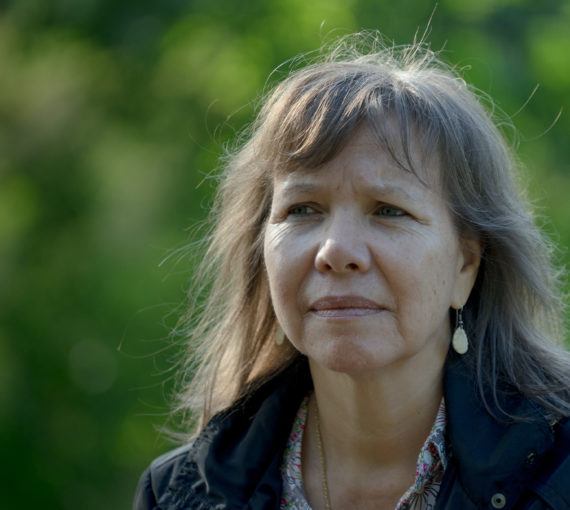
Katsi’tsakwas Ellen Gabriel: documentarian, visual artist, Indigenous human rights and environmental rights activist
Graduating from the New York Film Academy in documentary filmmaking in December 2021 provided Ellen with new advocacy tools to reclaim Indigenous Peoples’ narratives. In May 1990, Gabriel graduated from Concordia University with a bachelor of fine arts degree, majoring in visual arts.
Gabriel sits on the board of directors with Indigenous Climate Action, addressing violations of Indigenous Peoples’ rights, the climate crisis and environmental rights.
In 2004, she was elected president of the Quebec Native Women’s Association, a position she held for more than six years, until December 2010.
Awards: Gabriel received the 2005 Golden Eagle Award from the Native Women’s Association of Canada, 2008 International Women’s Day Award from the Barreau du Québec/Quebec Bar Association and the Indigenous Women’s Initiative “Jigonsaseh Women of Peace Award” in August 2008 for her advocacy work.
She won the 2023 Grand Prix for the Conseil des arts de Montreal for her film Kanatenhs — When the Pine Needles Fall and is co-author with Sean Carleton of the book When the Pine Needles Fall — about her advocacy work.
Gabriel was awarded an honorary doctorate from Université du Québec à Montreal in June 2024
She is also a staunch supporter and advocate for gender equity, the revitalization of Indigenous languages and culture, Indigenous self-determination/governance and the Indigenous-led #Land Back movement.