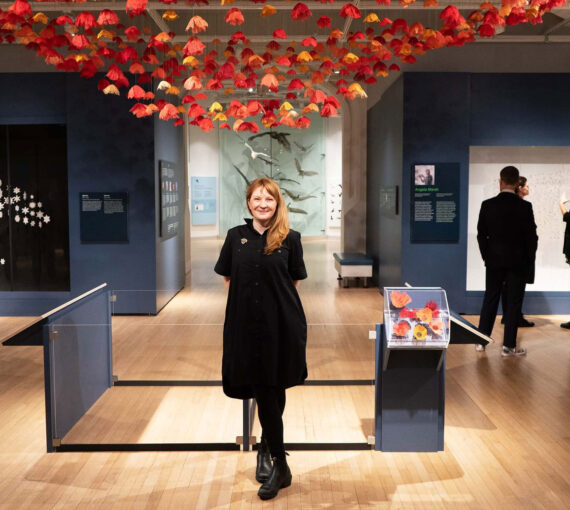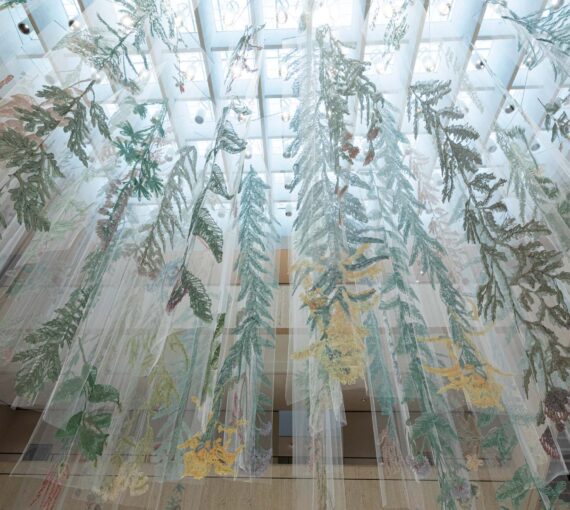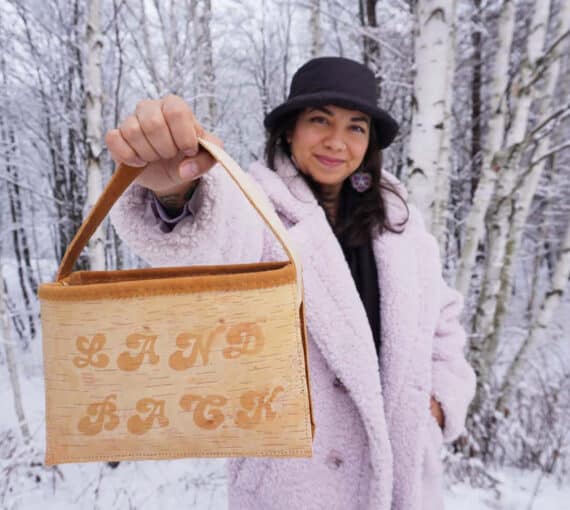
In just three years, the Rewilding Arts Prize has grown from a bold idea into a national platform for ecological imagination.
For the 2026 Rewilding Arts Prize, more than 650 artists from throughout Canada submitted work exploring rewilding — restoring and renewing our relationships with land, water, culture and more-than-human life. Over 300 of those artists were new to the prize, a powerful signal that ecological creativity is not a niche conversation, but a growing cultural movement.
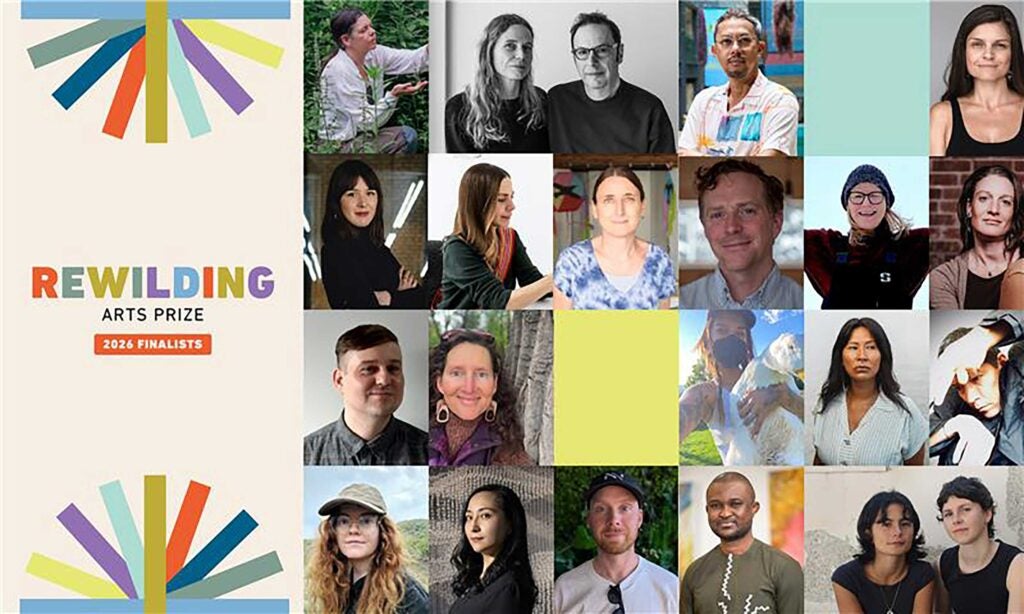
A jury of eight artists — all previous recipients of the inaugural prize — reviewed every submission and selected 20 finalists whose work stood out for its artistic strength, ecological depth and unmistakable creative spark.
These finalists span disciplines and territories. They are sculptors and storytellers, land-based practitioners and digital innovators, community organizers and speculative world-builders. Their practices engage everything from buffalo repatriation and wildfire response to ocean plastics, invasive plants, fungi, colonial landscapes and urban wild spaces.
Together, they show that rewilding is not a single aesthetic or medium. It is a shared commitment to reciprocity, responsibility and repair.
Explore the 2026 finalists below and discover how artists throughout Canada are helping reshape our collective relationship with the living world.
2026 Rewilding Arts Prize finalists (in alphabetical order by last name):
Carrie Allison is a nêhiýaw/Cree and Métis multidisciplinary artist based in K’jipuktuk (Halifax, Nova Scotia), whose work engages land, labour, and colonial histories through beadwork, sculpture, and digital media. Her work seeks to reclaim, remember, and celebrate her ancestry, while examining lawns and crops as colonial space taking tools.
Website: carrieallison.art
Instagram: instagram.com/carrieallisonart
Bianca Shonee Arroyo-Kreimes is a Canadian-Costa Rican artist based in Montréal whose digital installations and 3D environments explore environmental generational amnesia and mediated experiences of nature. Drawing on her childhood in the rainforest and migration to Canada, she examines how screens reshape our perception of the wild.
Website: shonee.space
Instagram: instagram.com/shhonee
Melanie Barnett is a ceramic sculptor based on Treaty 4/7 Territory in Medicine Hat, Alberta whose speculative works explore agriculture, monoculture, and climate science. Informed by rural prairie life, her sculptures imagine agro-ecological futures where native systems and farming practices coexist.
Website: melaniebarnettceramics.com
Instagram: instagram.com/melanie.barnett.ceramics
Ari Bayuaji is an Indonesian-born, Montréal-based multidisciplinary artist known for artwork and installations upcycling discarded ocean plastic. He collaborates with Balinese artisans for is ongoing Weaving the Ocean project in transforming discarded plastic fishing ropes into woven artworks that implicitly address ocean pollution, community, and global entanglement.
Website: aribayuaji.com
Instagram: instagram.com/aribayuaji
Maria Ezcurra is a Latina-Canadian artist based in Tiohtià:ke/Montréal whose textile installations and participatory projects explore migration, ecology, and collective care. Working with repurposed materials, she frames rewilding as both environmental and emotional repair.
Website: mariaezcurra.com
Instagram: instagram.com/maria_ezcurra
Lara Felsing is a Cree Métis artist from Northern Alberta whose plant-based paintings, textiles, and sculptural works are grounded in traditional harvesting and two-eyed seeing. Her materially reciprocal practice responds to wildfire, climate grief, and kinship with the land.
Website: larafelsing.com
Instagram: instagram.com/magpie3studio
Jude Griebel is a Calgary-based sculptor whose large-scale hybrid figures imagine post-human environments shaped by natural resilience and adaptation. Blending speculative fiction, eco-anxiety and humour, his detailed tableaux often position weeds and insects as emissaries for new ecologies taking shape.
Website: judegriebel.com
Instagram: instagram.com/judegriebel
Mbelo Hervé is a Montréal-based visual artist originally from the Democratic Republic of the Congo whose work focuses on rethinking how we represent ecological landscapes. He brings together fragmented imagery drawn from archives, media and lived experience to examine ecological collapse, resource extraction, climate change, displacement and resilience shaped by transnational experience.
Website: hervembelo.com
Instagram: instagram.com/hervembelo8
Richard Ibghy & Marilou Lemmens are a Quebec-based artist duo whose research-driven installations explore ecology, economy, and interspecies care. Their projects—often created in collaboration with scientists—build habitats for birds and other species while reimagining hospitality beyond the human.
Website: ibghylemmens.com
Instagram: instagram.com/mariloulemmens
Evan J is a writer, health researcher, and installation artist from Manitoba who now lives in so-called British Columbia. His “fire poems” combine lyrical fragments with flame in flamboyant land-based installations, all in an effort to connect decolonial storytelling, ecological restoration, and embodied performance.
Website: evanj.ca
Instagram: instagram.com/evanjpoet
JP Longboat is a Mohawk artist and cultural practitioner from Elgin, Ontario, whose performance-based installations draw on Haudenosaunee oral traditions and land-based storytelling. His Spirit Canoe works re-Indigenize waterways and foreground ancestral protocols of reciprocity and stewardship.
Instagram: instagram.com/jplongboat
Nevada Lynn is an interdisciplinary artist with Red River Métis and mixed European ancestry whose work explores buffalo repatriation and Indigenous resurgence. Incorporating Métis making practices with natural materials such as beeswax, charcoal, and reclaimed skulls, her work frames rewilding as cultural and ecological restoration. Nevada lives and works on the shared unceded territory of the Skwxwú7mesh and Lílwat Nations in Whistler, BC.
Website: nevadalynn.com
Instagram: instagram.com/nevadacreates
David McGregor is a rural artist based in Treaty 8 territory in northwestern Alberta whose site-responsive works emerge from close observation of forest systems. Through gestures such as carving water bowls into trees and documenting wildlife response, he positions art as reciprocal offering.
Website: davidmcgregor.ca
Instagram: instagram.com/david_b_mcgregor
Emily Rose Michaud is an interdisciplinary artist and educator based in the Outaouais region of Quebec whose land-based and participatory projects advocate for the cultural importance of wild urban spaces. A co-founder of Les Amis du Champ des Possibles, she merges ecology, civic engagement, and community organizing.
Links: linktr.ee/emilyrose.michaud
Instagram: instagram.com/emilyrose.michaud
Nicole McDonald-Fournier is a Montréal-based agro-ecological artist who has practiced urban rewilding for more than two decades through performance, installation, and stewardship of her site, InTerreArt. Her “do nothing” methodology foregrounds non-intervention and plant autonomy as artistic strategy.
Website: nicolefournier.blogspot.com
French web: fonderiedarling.org/nicole-fournier
Melaw Nakehk’o is a Dene/Dënesųłinë multidisciplinary artist and hide tanner from Denendeh, currently residing in Yellowknife. Working with salvaged caribou hide, bone and antler, she honours the animals while addressing climate change, mining exploitation, disrespectful harvesting and our reciprocal responsibility to the land.
Website: melawnakehko.com
Instagram: instagram.com/melaw_nakehko
Debra Frances Plett is a Winnipeg-based sculptural book artist whose practice engages foraged and natural materials to explore sustainability, material transformation, and a strong sense of place. Her series on lake sturgeon links climate science and storytelling through handcrafted, materially intimate forms.
Website: debrafrances.com
Instagram: instagram.com/debra_frances
Masumi Rodriguez and Elena Kirby are a Montréal/Toronto-based artist duo whose collaborative practice centers invasive plant species as material for fibre-based installations and workshops. Through community papermaking and material research, they engage with the politics of “invasivity”, stewardship, and land-management practices tied to these plants.
Website: tmdfm.com
Instagram: instagram.com/_masu and instagram.com/elenakirbys
Shay Salehi is a first-generation Canadian, born to Polish and Iranian immigrants, with an upbringing shaped by both histories. This perspective has deeply informed her practice, reinforcing her understanding of nonhuman ecologies as vital sources of knowledge and shaping her work as a researcher and advocate for interspecies justice.
Website: shaysalehi.ca
Instagram: instagram.com/shaysalehi
Xiaojing Yan is a Chinese-Canadian artist based in Markham, Ontario, whose installations and living sculptures engage with fungi, native plants, pearls and other organic materials. Blending diasporic identity, ecological design and digital tools, her work reframes art as a living negotiation between human and non-human worlds.
Website: yanxiaojing.com
Instagram: instagram.com/xiaojing.yan.studio