Ontario Premier Doug Ford seems to have a surprising soft spot for animals. He weighed in on behalf of captive belugas in Marineland and spoke out against the use of cats and dogs in medical testing. But wild creatures? Not so much.
His government recently repealed Ontario’s Endangered Species Act, which was considered a gold standard when it was released but has been continually eroded at the behest of developers and industry.
The act has now been replaced by the empty and cynical Species Conservation Act. The new act reduces the definition of habitat — which used to include area species’ need to carry out their life processes, including reproduction, rearing, hibernation, migration and feeding — to only nests and dens. This dooms species that need places to eat, mate or travel, which is any species that has wings or legs.
The new act reduces the definition of habitat — which used to include area species’ need to carry out their life processes, including reproduction, rearing, hibernation, migration and feeding — to only nests and dens.
Also, 106 species are now left off of Ontario’s species list altogether, as the province has offloaded its responsibilities to steward and recover aquatic species, migratory birds and species of special concern. These will now have to rely solely on the federal government to exercise its powers under its Species at Risk Act. This is an odd approach for Ontario, as it usually opposes federal initiatives, arguing that the feds should stay in their own lane as provinces are the best stewards of environmental decision-making processes.
The province has argued that dumping its responsibilities for these species removes “duplication.” If only it were true that both the provincial and federal governments protected habitat!
For years, species at risk in Ontario have received little to no habitat protection, as the province exempted most industrial and development practices from the key prohibitions against habitat destruction under the now-repealed Endangered Species Act.
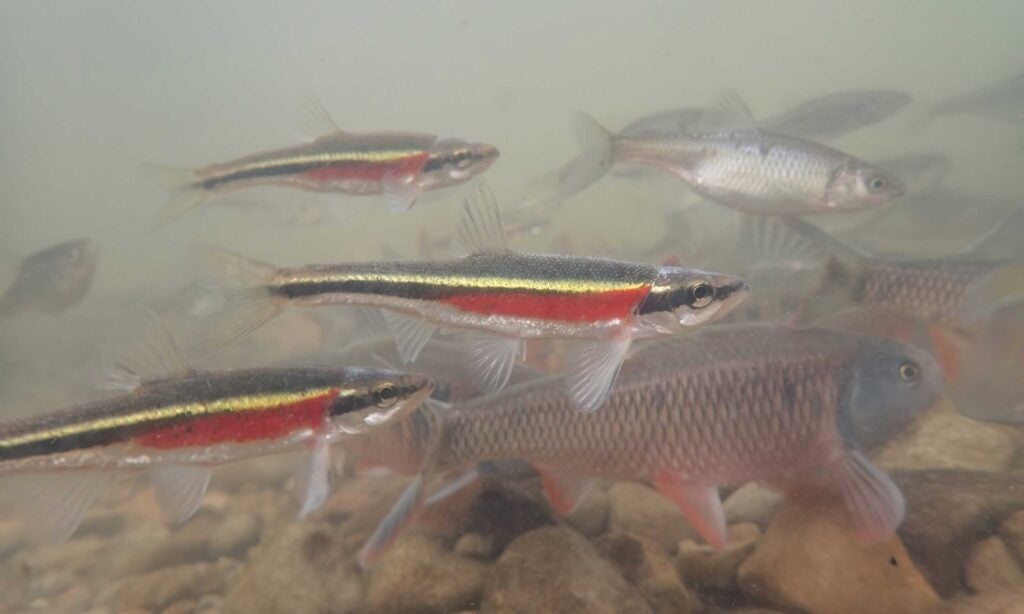
For example, the forest industry continues to log in the intact and previously unlogged forests required for boreal woodland caribou survival, and the proposed Highway 413 would contribute to the extirpation of the redside dace (a colourful fish), the western chorus frog and the rapids clubtail dragonfly if it goes ahead. To add further insult, the provincial government has just sold off 60 per cent of Wasaga Beach Provincial Park beaches, therefore threatening survival of the piping plover, a highly endangered shorebird.
Given the behaviour of the Ontario government, perhaps we should be more honest with ourselves about the fact that provincial species protection has been on its deathbed for a long time and it is time for the federal government to step in. The above examples (among others) require federal intervention under the Species at Risk Act. It is reasonable to expect action given the federal government’s recent campaign commitments to take nature protection, and species at risk in particular, seriously.
provincial species protection has been on its deathbed for a long time and it is time for the federal government to step in.
Major projects in the province (and in the rest of Canada) must be accompanied by major conservation and restoration initiatives to uphold Canada’s commitments to halt and reverse nature loss. Strong, healthy ecosystems not only support all life (by producing oxygen, purifying air and storing carbon) and mitigate disasters (by creating soil, supporting pollination and controlling erosion), they also, as just outlined by the U.K., play a key role in maintaining national security.
At some point, we will need to bring back a science-based provincial endangered species law to protect and restore the meadows, wetlands and forests that the premier cannot see. In the meantime federal Environment, Climate Change and Nature Minister Julie Dabrusin and the rest of the federal government must step in with the tools they have to ensure the rarest and most threatened plants and animals in this province are not wiped out.
Rachel Plotkin is wildlife campaigner at the David Suzuki Foundation. Tim Gray is executive director of Environmental Defence.
This article was originally published in The Hamilton Spectator.

Our work
Always grounded in sound evidence, the David Suzuki Foundation empowers people to take action in their communities on the environmental challenges we collectively face.