Reciprocity is a key element of the world views of many Indigenous cultures, including those in Canada. The relationships between people, lands, waters and all living things create a web of connections that sustain all life. Reciprocity recognizes the importance of each of these connections and values giving and receiving in equal measure in each of these relationships.
Our modern industrialized Western society does not function in alignment with this view of reciprocal relationships. We have long been taking more from our lands and waters than we have been giving back, often without an understanding of the consequences. The world’s biodiversity and natural spaces are increasingly under pressure as resource extraction and industrial development continue. With this comes a loss of function and the services that ecosystems provide, including water filtration, carbon storage, temperature regulation, flood prevention, food provisioning and more. Many Indigenous Peoples in Canada live on the front lines of industrial development and directly experience its impacts. There is a huge opportunity to address the biodiversity crisis and advance reconciliation by empowering Indigenous Peoples to reclaim governance of their lands and waters and integrating their knowledge and world views into stewardship.
The David Suzuki Foundation supports Indigenous Peoples in Canada to lead the stewardship of their territories centring their traditional knowledge and values. Where communities are limited in capacity, the Foundation provides technical support to bring Western science and traditional knowledge together to plan for conservation, restoration and sustainable land use on their territories. Our approach prioritizes protecting and restoring healthy ecosystems to support healthy communities. As part of this program, known as Nature-Directed Stewardship, we are working with several First Nations communities in Canada to advance their visions for conservation and stewardship on their territories.
In the boreal forest, we have mapped the cumulative impacts of various industrial activities, including mining, road-building and forestry, on ecosystem health in our partner nations’ territories. When the different activities are overlaid, there is very little intact area left (see Figure 1: Landscape intactness in a forest management area in the eastern boreal forest). This highlights the importance of protecting these areas and preventing resource extraction to maintain the ecosystems and the interconnected networks of organisms and functions that exist there.
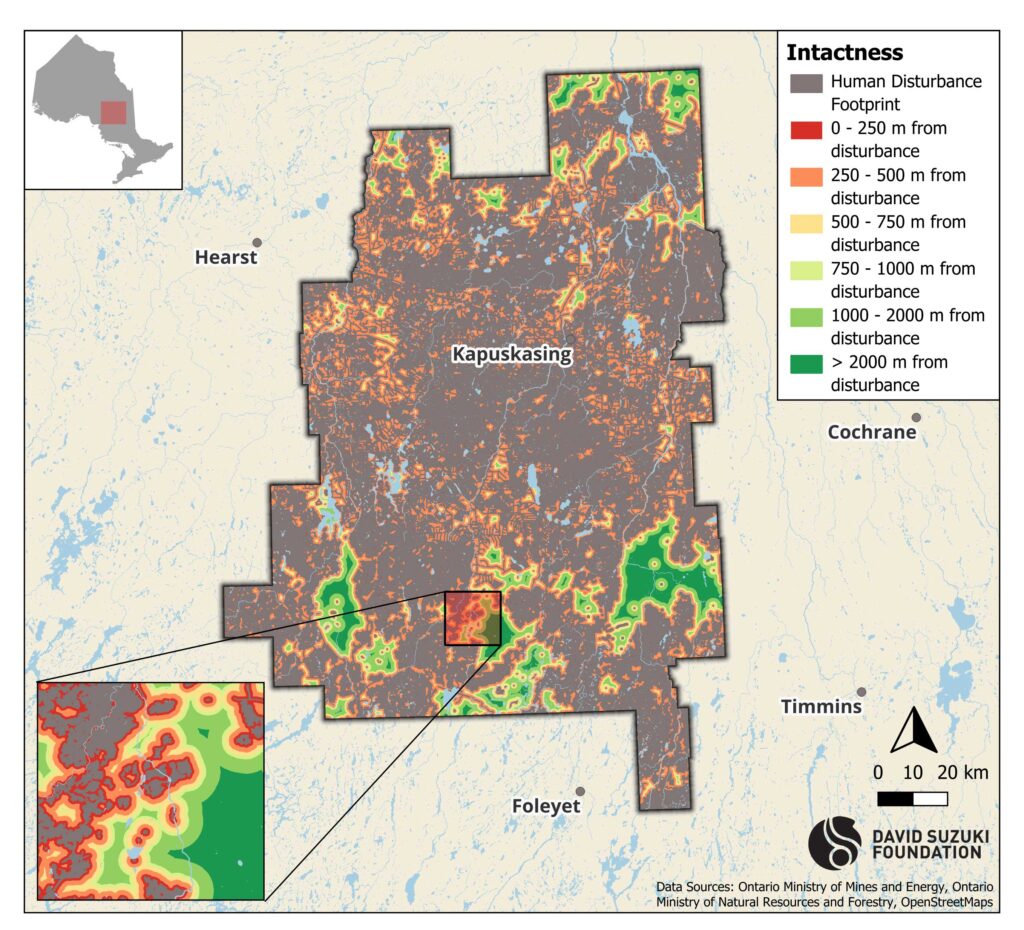
Figure 1 Map of ecosystem intactness, a measure of how much ecosystems have been impacted by industrial activities, in a forest management area in the boreal forest of Ontario, Canada. Inset map at the bottom left shows a zoomed-in view of the intactness in one part of the management area.
With a partner Nation on the West Coast of Canada, we’ve been working to evaluate the existing network of protected areas within their territory and to identify opportunities to expand and strengthen those protections in ways that are meaningful to the nation (see Figure 2: Protected and conserved areas in the coastal region of British Columbia, Canada). The nation is currently not included in the governance or decision-making for any protected areas within their territory, and many cultural and ecological values are not well represented in protected areas. For example, only 22 per cent of the total length of salmon-spawning streams are protected. Salmon are a vital connection between marine, freshwater and terrestrial ecosystems, as they transfer nutrients inland from the ocean during their migration to reproduce in freshwater streams. Culturally, they are a strong symbol and an important food source for coastal First Nations. Identifying gaps such as these highlights opportunities for establishing protected areas and improving existing protected areas management.
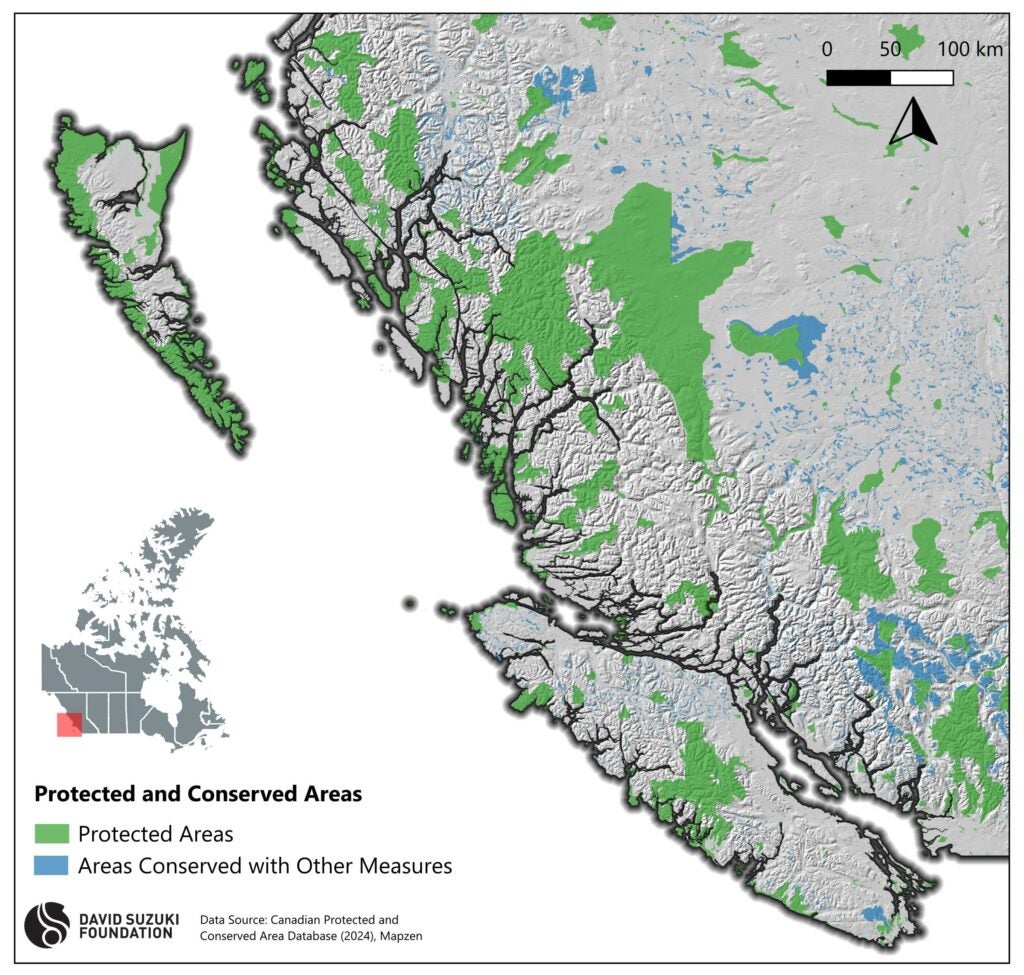
Figure 2 Map of protected and conserved areas in coastal British Columbia, Canada.
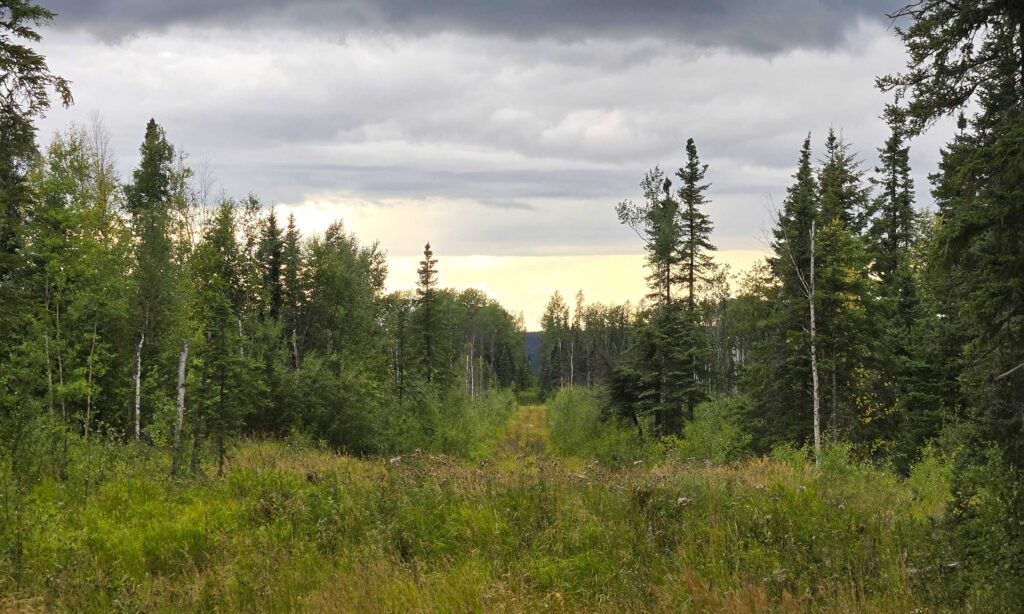
Cultivating relationships and reciprocity with the lands and waters means not just protecting nature to reduce what we take but also giving back. In landscapes that have been highly impacted by industrial development, restoration work to bring degraded ecosystems back to their full diversity and functioning is essential to supporting healthy landscapes. For nations whose territories have been highly affected, we have identified priority areas for restoration, where impacts have been relatively minimal and where important ecological and cultural values could be strengthened from restoration efforts (see Figure 3: A view along a linear disturbance feature in a forest). The restored ecosystems will support healthy wildlife and healthy communities as these nations proceed from planning to on-the-ground restoration.
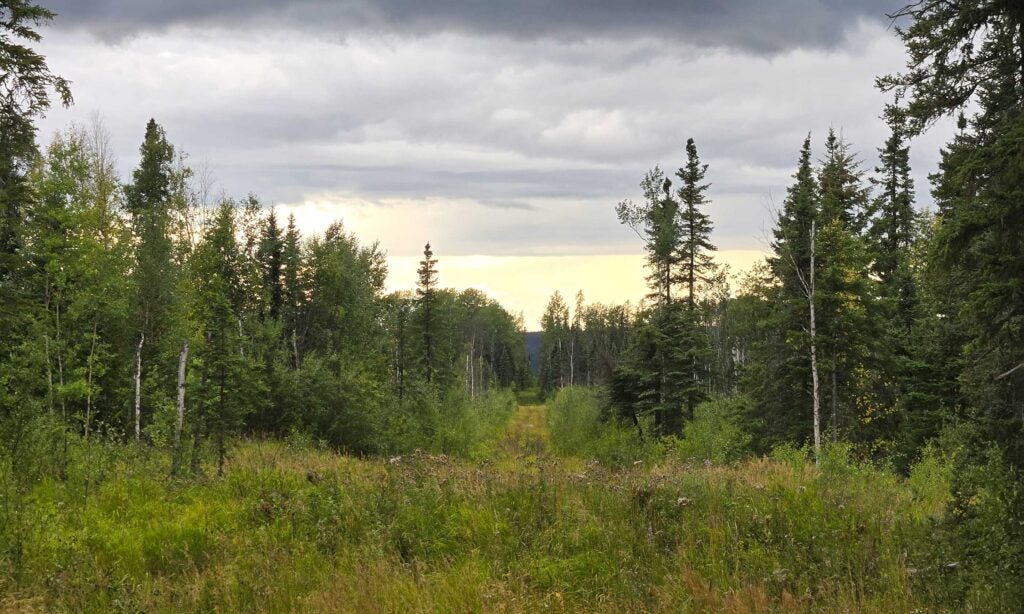
Figure 3 A view along a linear disturbance feature, where trees have been removed from the forest.
Indigenous-led conservation is shown to be highly effective at promoting biodiversity and delivering positive climate outcomes while supporting communities. Empowering First Nations to lead conservation and restoration efforts ensures their values and views are integrated in the stewardship of lands and waters. Bringing the concepts of reciprocity and interconnectedness, among other Indigenous teachings, into how we steward the land improves ecological outcomes that benefit people in local communities and around the world.
Our work
Always grounded in sound evidence, the David Suzuki Foundation empowers people to take action in their communities on the environmental challenges we collectively face.