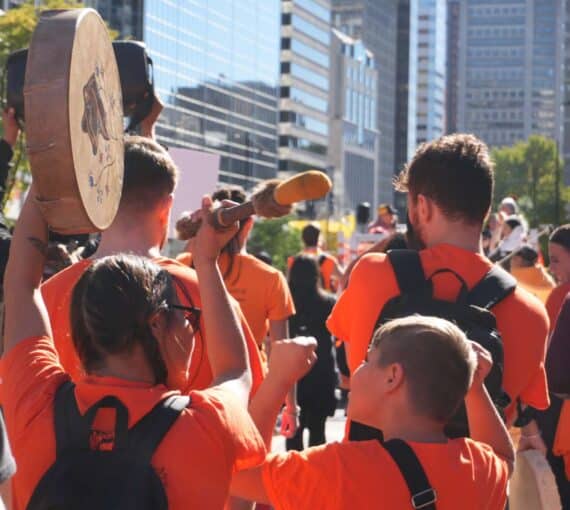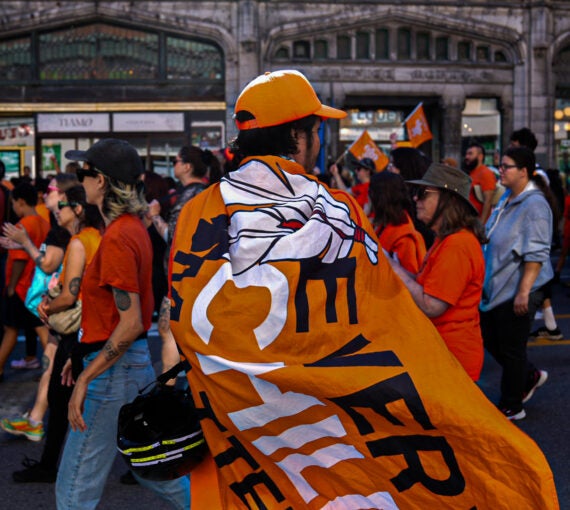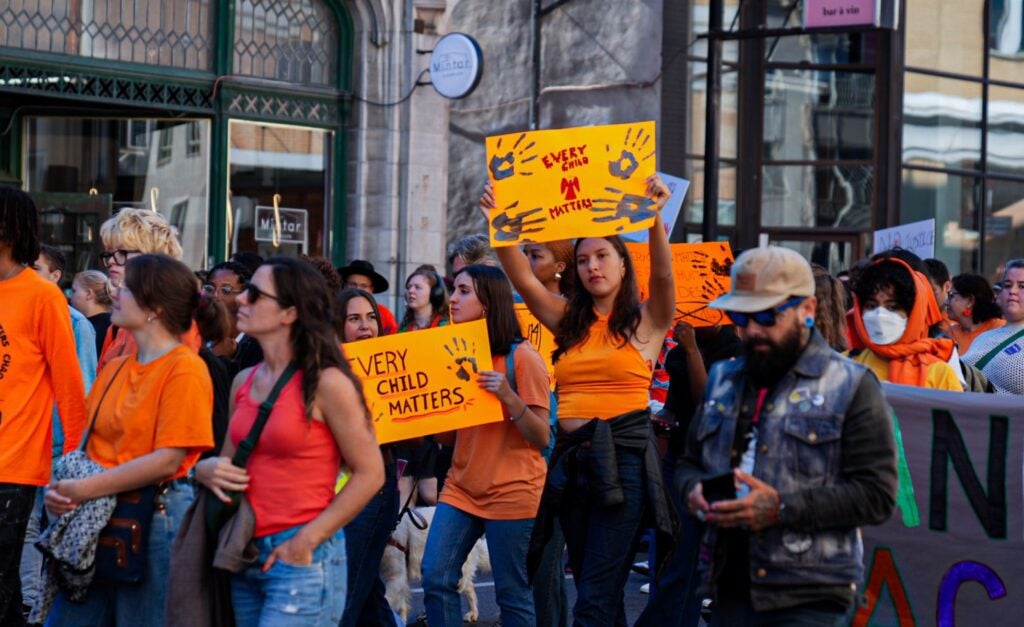
Photo taken during the Every Child Matters march organized by the Native Women's Shelter of Montreal in 2024. (Photo: Laurence Bolduc via David Suzuki Foundation))
The David Suzuki Foundation supports the Permanent Peoples’ Tribunal on missing Indigenous children and unmarked graves, to be held in Tiohtià:ke/Mooniyang/Montreal in May 2026. Emphasizing the truth about unmarked graves is a step toward justice and healing for people and land. David Suzuki delivered a message in support of this historical initiative led by the Native Women’s Shelter of Montreal. The following text is a transcript of the video interview.
Today, I want to talk about something many people still don’t know: the Permanent Peoples’ Tribunal is examining the legacy of residential schools and their ongoing impacts.
Residential schools didn’t just separate children from their families; they severed relationships with language, culture and land.
When you break a people’s connection to the land, you disrupt generations of ecological knowledge and stewardship that can never be duplicated by science because it is distilled from thousands of years of observation and experience.
Indigenous land care isn’t just tradition; it’s a blueprint for sustainability based on respect, humility and reciprocity, and “to act in a good way” that ensures nature’s generosity and abundance. But those systems were intentionally damaged through colonial policies — based on human supremacy for exploitation of resources — with little regard to harmful consequences.
Support Indigenous voices
Listen to David Suzuki’s message in support of the Permanent Peoples’ Tribunal on missing Indigenous children and unmarked graves, which will take place in Tiohtià:ke/Mooniyang/Montreal in May 2026.
That harm shows up today in environmental crises, land dispossession and the erasure of Indigenous governance.
The tribunal is creating space for survivors and communities to speak truth to these violations. Their testimonies show how cultural genocide and environmental injustice are intertwined.
Healing isn’t only about acknowledging the past; it’s about restoring land relationships and Indigenous rights now.
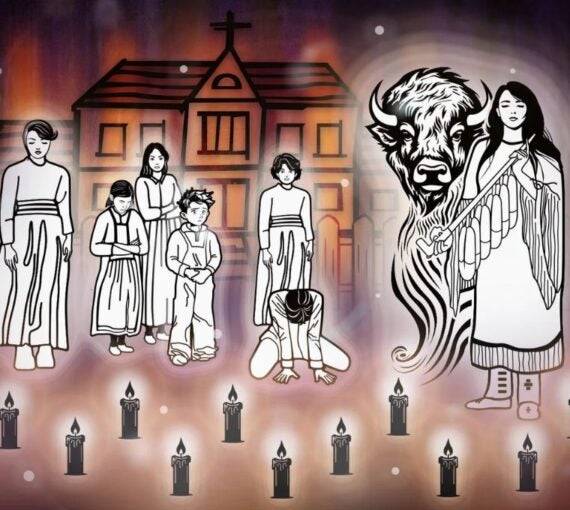
The Permanent Peoples’ Tribunal is an independent tribunal that has been investigating human rights violations around the world since 1979. A jury of experts conducts an independent and impartial investigation and organizes public hearings. The evidence is then examined and a final judgment and advisory opinion are ultimately rendered.
The Permanent Peoples’ Tribunal’s public hearings on missing Indigenous children and unmarked graves will be held from May 25 to 29, 2026, and will be broadcast live.
For more information, visit the website our-truths.com.
Environmental justice cannot happen without Indigenous justice. And reconciliation isn’t real unless it includes land back*, stewardship and respect for Indigenous law.
If you care about climate, conservation or justice at all, pay attention to this process. Support Indigenous voices, learn the history and challenge the systems that created this harm. Because repairing relationships — with communities and with the land — is how we build a future that’s just for everyone.
*”Land back” means Indigenous nations having authority over their lands and futures, NOT seizing private property. To learn more about “land back,” visit this page.