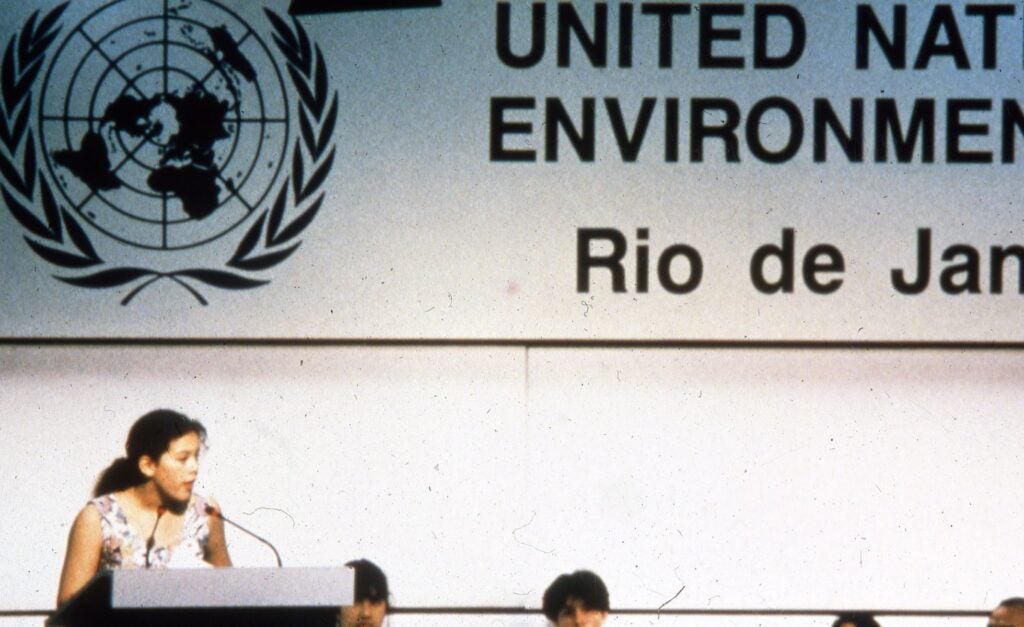
Severn Cullis-Suzuki delivers her iconic 1992 speech at the Earth Summit in Rio de Janeiro, Brazil. (Photo: Tara Cullis)
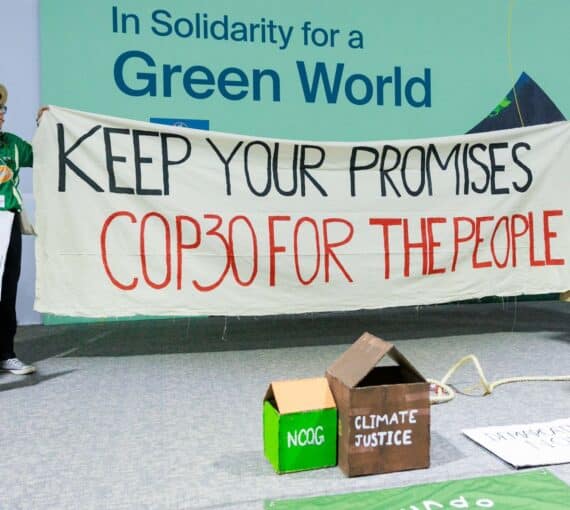
With COP30 taking place in Belém, Brazil, Severn Cullis-Suzuki reflects on the powerful words from her iconic 1992 Earth Summit speech in Rio de Janeiro, Brazil.
“We’ve raised all the money to come here ourselves; to come 5,000 miles to tell you adults, you must change your ways.”
I think one of the most powerful things about that speech is that it was a child speaking to adults. A child doesn’t have ulterior motives; it’s a young person speaking their truth. It’s one of the most powerful aspects of young activists today and always — their voice is so critical. Young people have always been on the front lines. They’ve always spoken truth to power. Another reason why this quote impacts people is because parents love their children, and they think of their own children when they hear those words coming from a 12-year-old.
I feel a lot of grief that the situation is so dire today that so many young people have had to become activists; that being a ‘youth climate activist’ is an established title. Parents are supposed to take care of their children. Parents should protect their children. But the societal and economic infrastructures that we’ve created, the frameworks that we’ve created, do not do what parents want most, which is protect their children.
“In my life, I have dreamt of seeing the great herds of wild animals, jungles and rainforests full of birds and butterflies, but now I wonder if they will even exist for my children to see.”
Hearing that quote is very devastating. We’re now established in part of the sixth mass extinction event in the history of life. So many creatures that I grew up hearing about, such as white rhinos and different species of whales … are now not possible for my children to see.
When I was a child I went to the Monteverde Cloud Forest in Costa Rica with my family. At that time the famous ‘golden toad’ had not been seen for a few years, but people were still hopeful. Now it’s clear that it’s no longer with us. That possibility has been erased. It’s devastating how much we’ve lost.
“If you don’t know how to fix it, please, stop breaking it.”
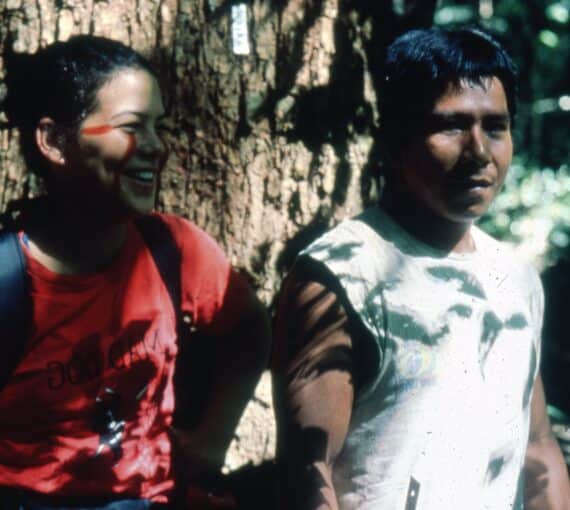
Oh, I love that quote. It’s actually from Vanessa Suttie, one of the kids from our Environmental Children’s Organization. We had these short speeches that we were working on and over the two weeks we were giving them every day in different venues. So, when I had the chance to speak at the Earth Summit in Rio, we all collaborated and put together the greatest of our hits in one ultimate speech. So that line’s from her.
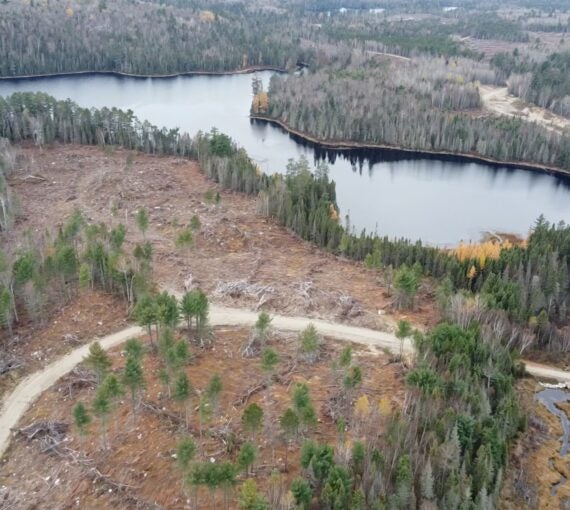
Why are we breaking some of the most incredible, beautiful, intricate, sophisticated creations of evolution, in ecosystems that are incredibly productive? I think about this a lot with mining. We create these huge pits in the earth and mine these different materials, and create terrible pollution that we can never get rid of. Likewise, we don’t know how to deal with nuclear waste. We don’t know how to sequester carbon. We just don’t know how to do that and thinking that future technology is somehow going to get us out of it … it’s just very illogical and ridiculous thinking, but most of all, it saddles our children with these problems we don’t know how to fix.
“I am only a child yet I know if all the money spent on war was spent on finding environmental answers, ending poverty and finding treaties, what a wonderful place this Earth would be!”
I feel especially strongly about that quote because of what Canada is now doing. Because of what the world is now doing. António Guterres of the UN talked recently about the amount of money that is being pumped into arms, weapons and war. It absolutely dwarfs what is spent on aid and help. I mean, no wonder we’re in the mess that we’re in! And yet we need youth to tell us that because adults are saying more arms is going to make us safer.
“Parents should be able to comfort their children by saying, ‘Everything’s going to be all right,’ ‘It’s not the end of the world’ and ‘We’re doing the best we can.’ But I don’t think you can say that to us anymore.”
The language around being able to comfort our children is even more relevant today. Because of our technology today, all of us, including children, are live-streaming violence into our eyes, daily. We have a youth mental health crisis that’s happening in the Western world right now. None of this is unconnected. None of this is surprising. And that’s something I, as a parent, am so concerned about — that my children feel hopeless. We have a responsibility, as parents, as aunties, grandparents, friends — we have a responsibility. We have a responsibility to survive, and help the next generation survive. We are the culmination of our ancestors surviving impossible odds, and we need to realize that and tap into that survival instinct and figure out how we’re going to work together to build some security and some stability for the future.
Severn Cullis-Suzuki speaking at Rio in 1992
David Suzuki’s & Tara Cullis’ daughter, Severn Cullis-Suzuki, speaking at the Earth Summit in Rio de Janeiro in 1992.