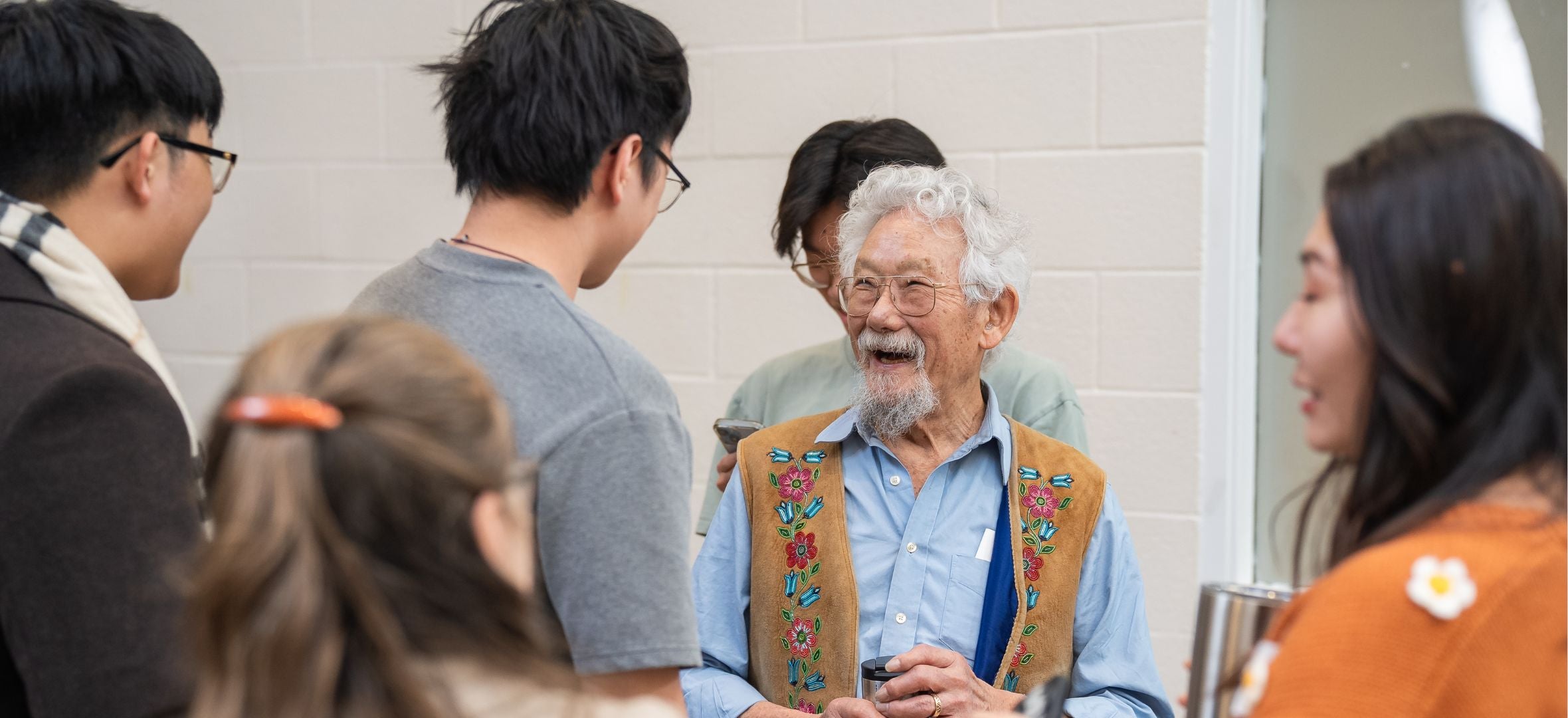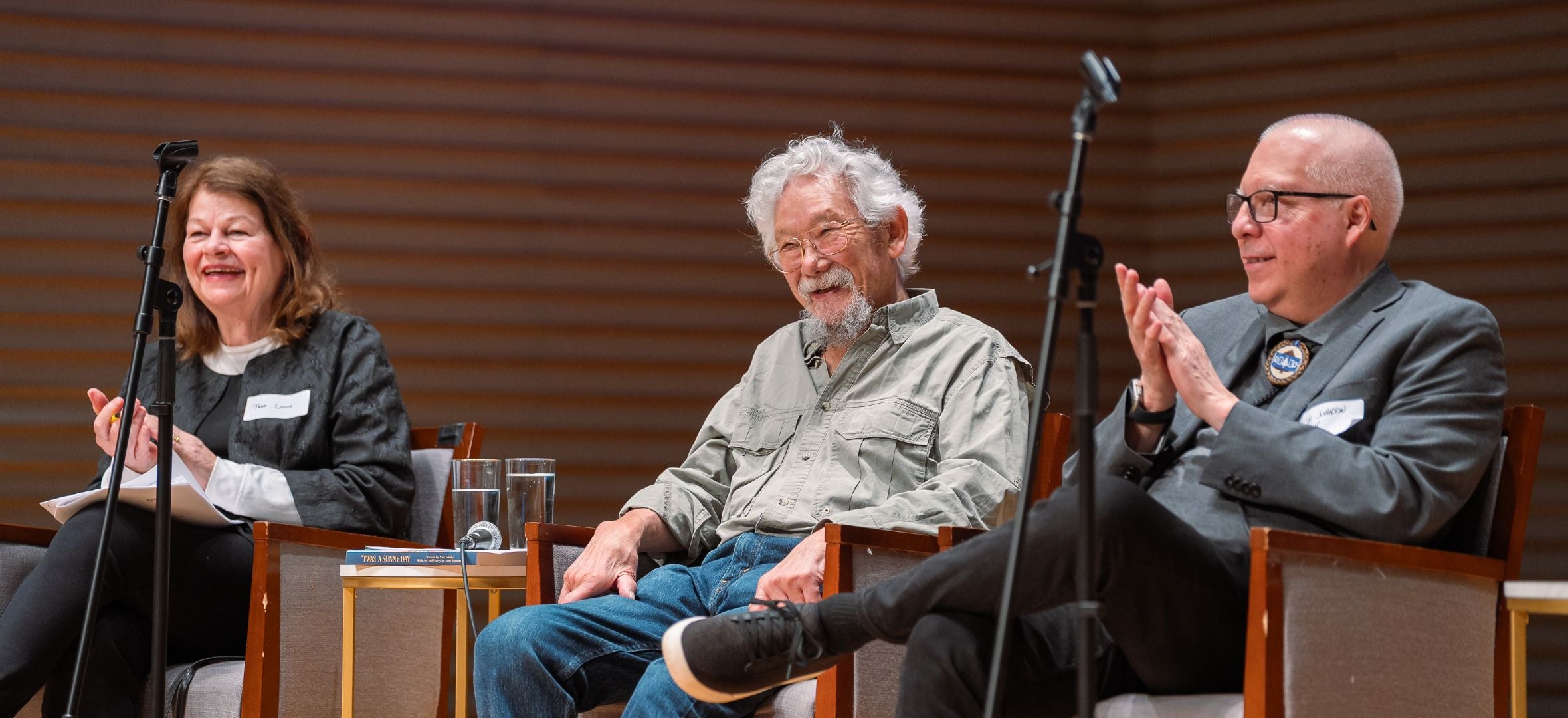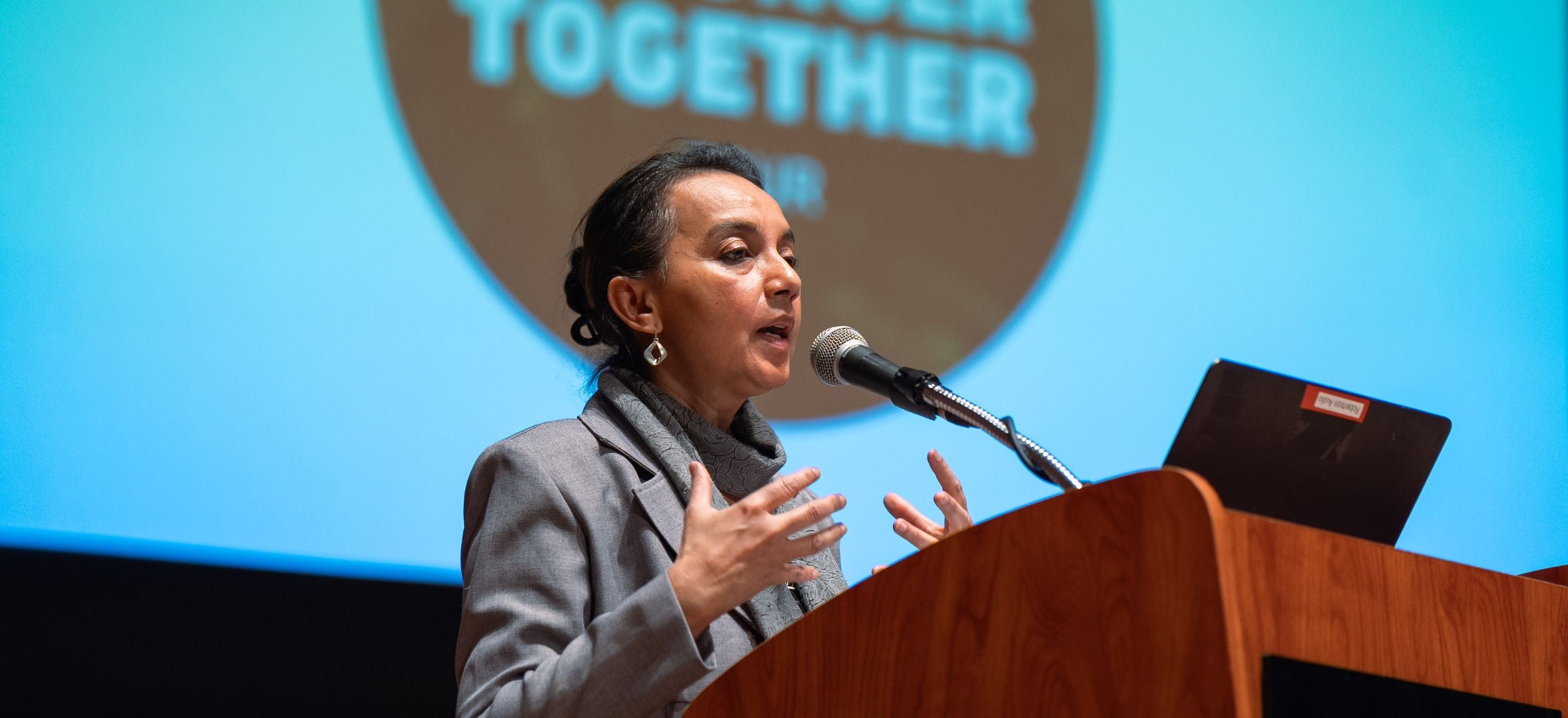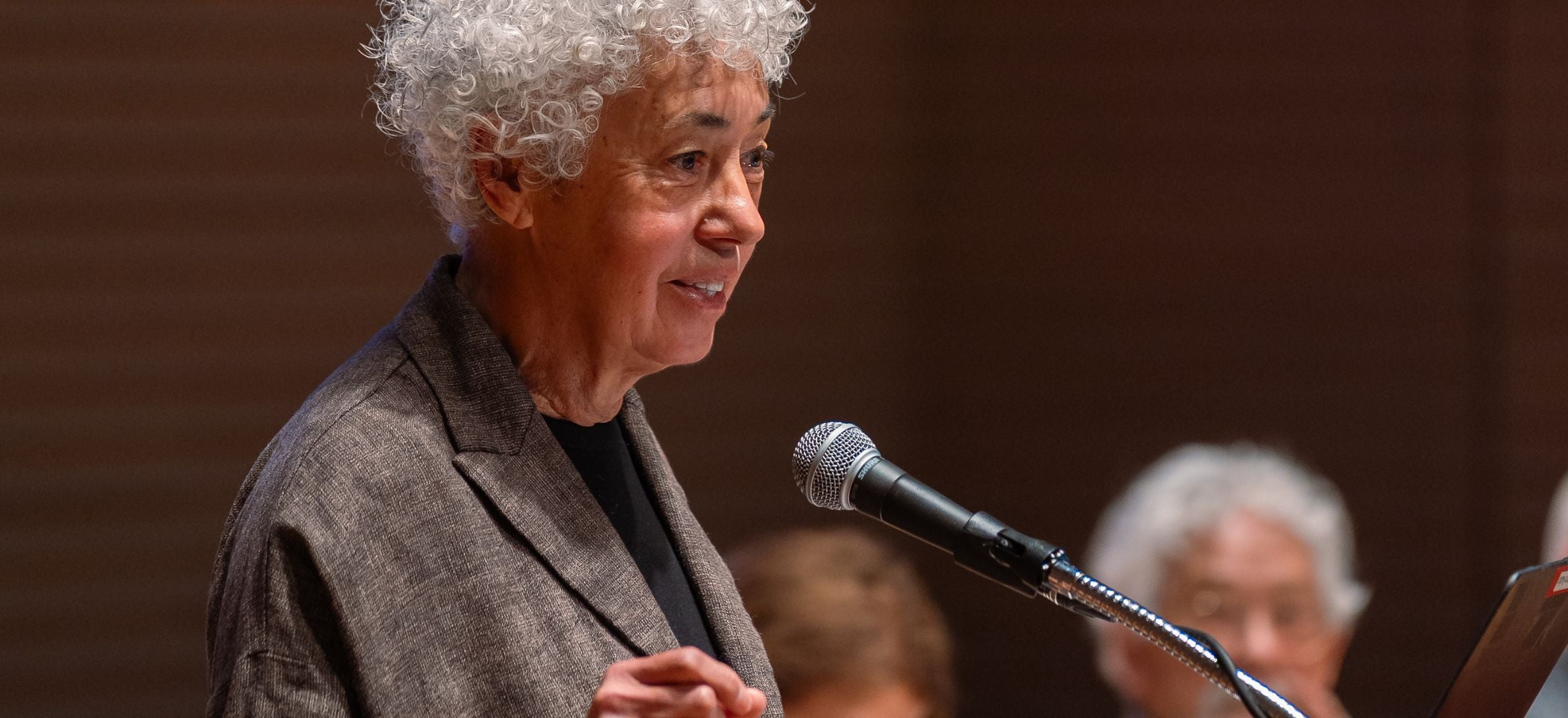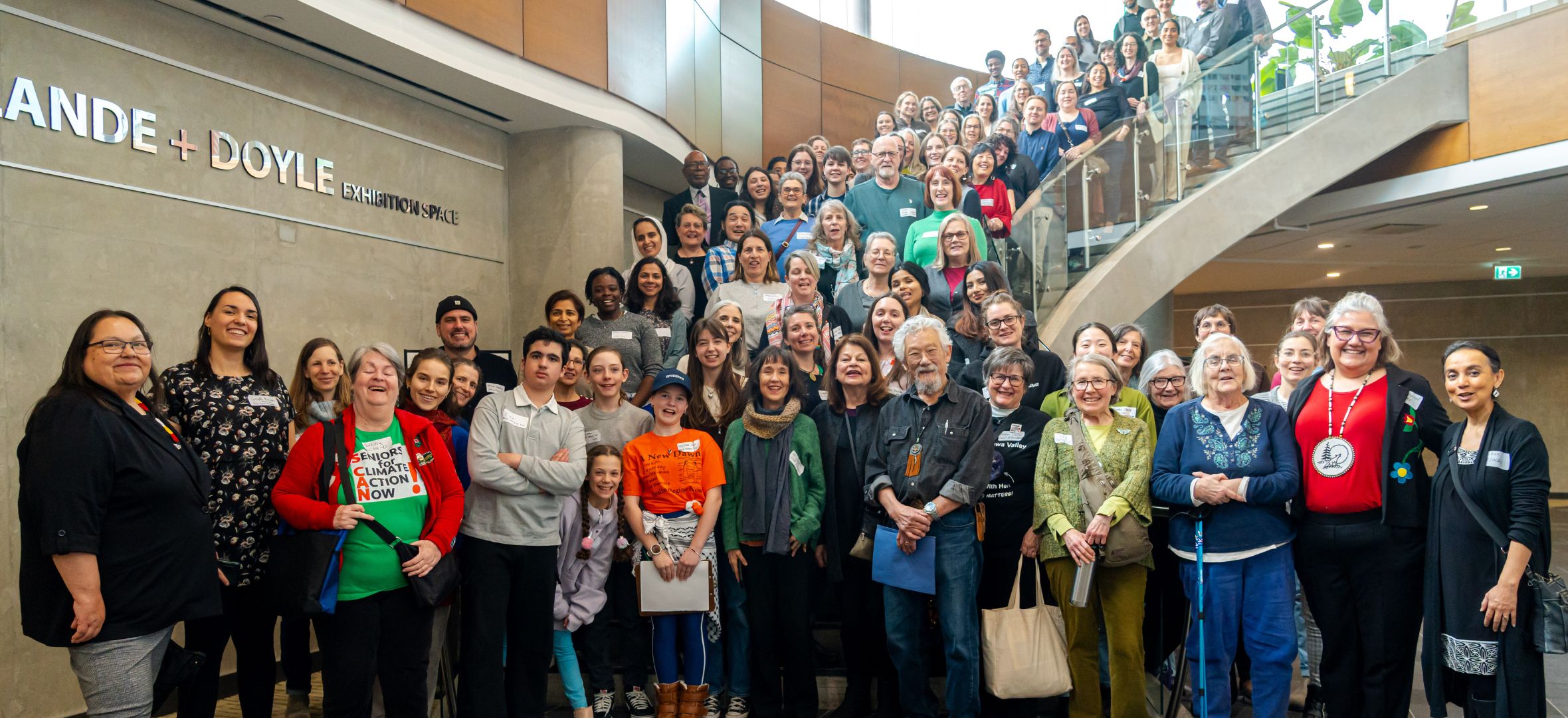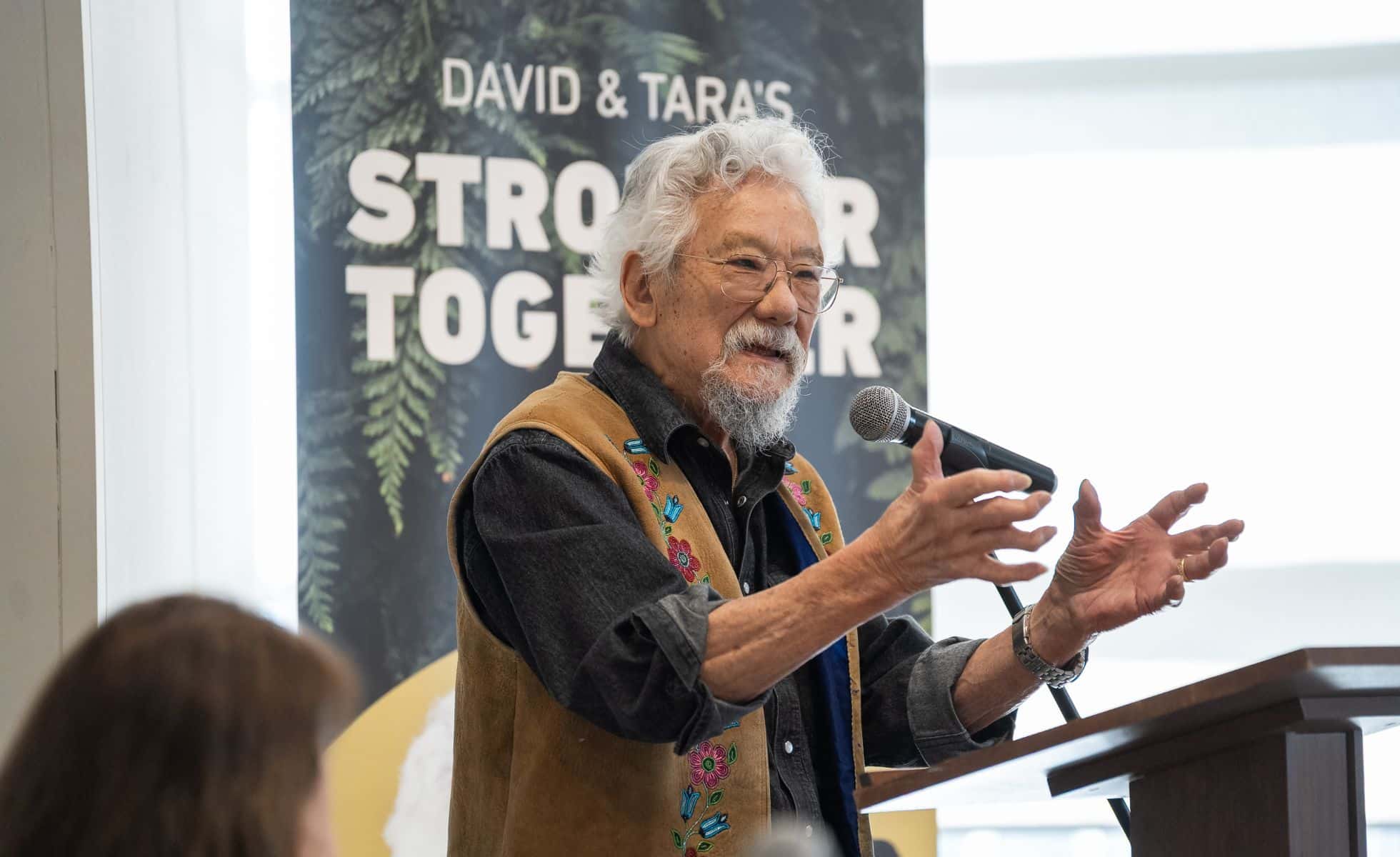
David Suzuki speaks to participants in Mississauga on the Stronger Together Tour (Photo: Axis Collective)
As climate emergencies like floods, heat waves and storms become more frequent and severe, it’s increasingly clear that when an emergency strikes, governments and services alone can’t respond at the scale and speed required to keep everyone safe. In fact, many governments state that people should be prepared to care for themselves and their families for 72 hours after an emergency. (In northern or remote communities, it can be much longer.)
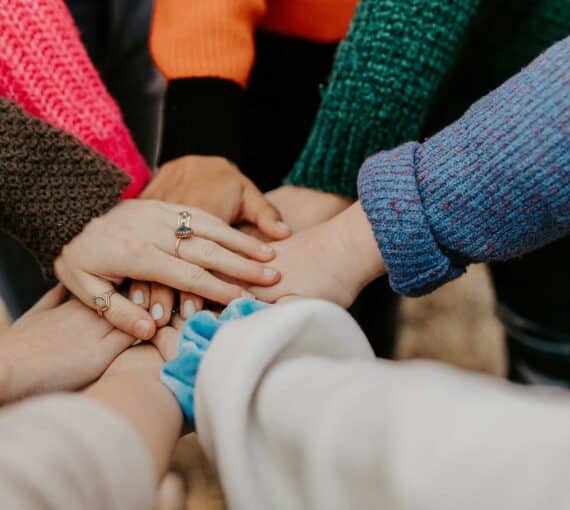
Preparing for emergencies isn’t just about protecting individual households though. It’s about getting to know our neighbours and making a plan to work together so that everyone is cared for and no one is left behind. The most resilient communities have strong social networks.
But in this time of unprecedented social isolation and disconnection, many of us don’t even know the people we live alongside, and we certainly aren’t prepared to weather an emergency together.
David and Tara’s Stronger Together tour
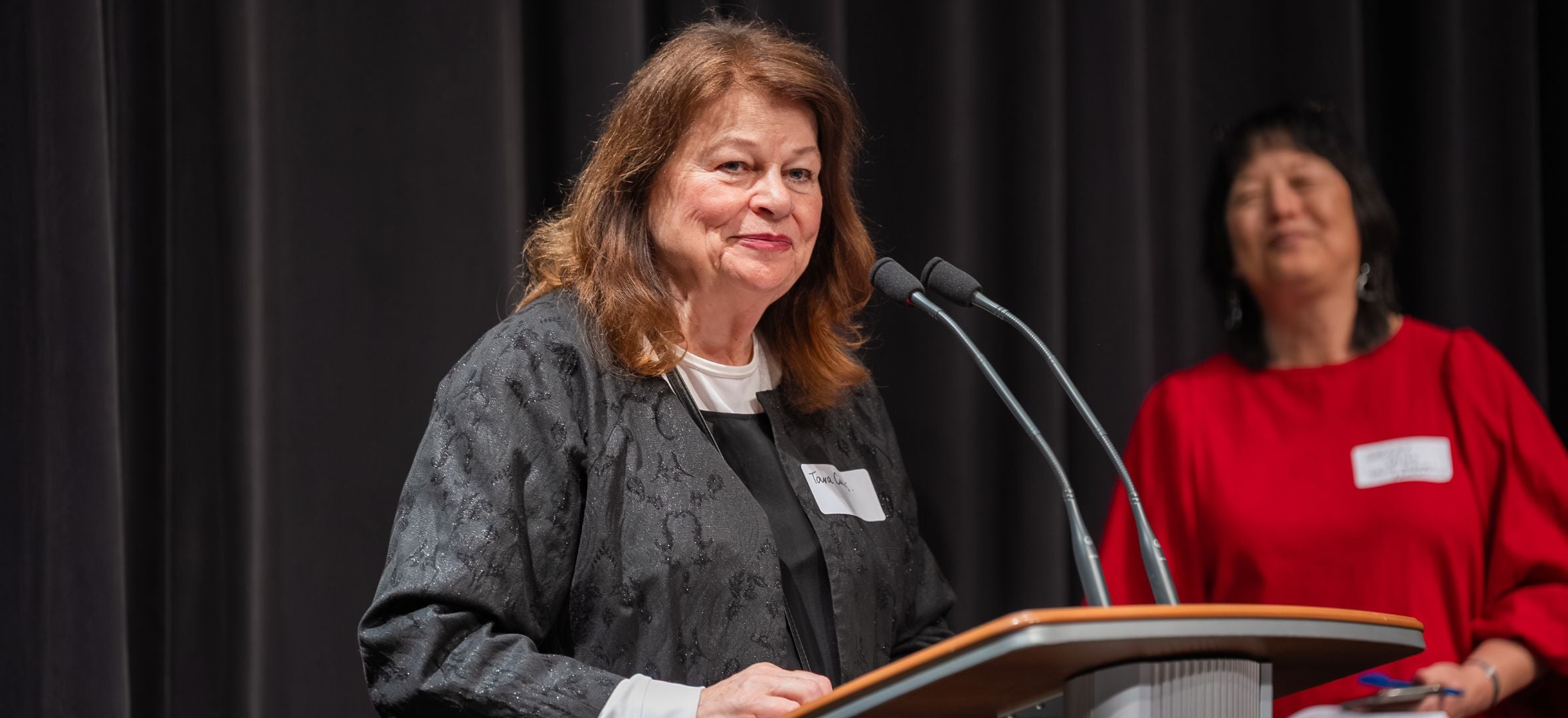
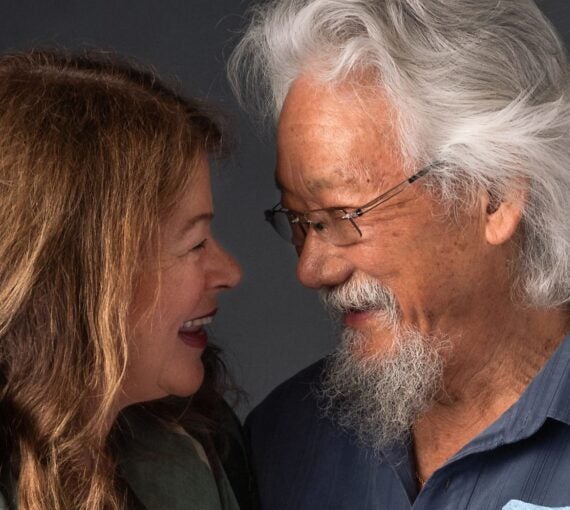
David Suzuki and Tara Cullis were already well aware of this when they learned about a letter the Finnish government sent to all residents a few years back. As Tara recalls, “It was a warning that trouble lies ahead. Finland has a border with Russia. Its oceans are warming … Like here, there will be forest fires, deadly floods, massive heat waves, smoke, power breakdowns.
“The message was: develop resilience. Get to know your street, your city block, your neighbours. In a crisis, the government won’t be able to get to you with help as quickly as you’d like. Become as self-sufficient as you can. Do an inventory of your assets. Know where your doctors, nurses, cooks, snowblowers, generators, tools, water, gardens and orchards are. Map out who are in wheelchairs or will need power when the lights go out. Know where the elders are. Understand what you have to offer, and what your own needs are. Your safety will lie not in hoarding but in sharing.”
Understand what you have to offer, and what your own needs are. Your safety will lie not in hoarding but in sharing.
Moved by the message and hopeful that it could spread throughout Canada, David and Tara began to envision a series of community events that would spark conversations about community connection and resilience. Their aim was not to lecture but to learn how, in times of worsening climate emergencies, we can make sure everyone is taken care of.
David and Tara’s Stronger Together tour launched in February 2026, when they were touring their play, What You Won’t Do for Love, in Ontario. The Stronger Together tour stopped in five southern Ontario cities (Richmond Hill, St. Catharines, Milton, Mississauga and Ottawa) and brought together a range of community members with diverse perspectives, including local leaders and grassroots groups, to explore ways to strengthen local self-reliance and build networks of mutual support.
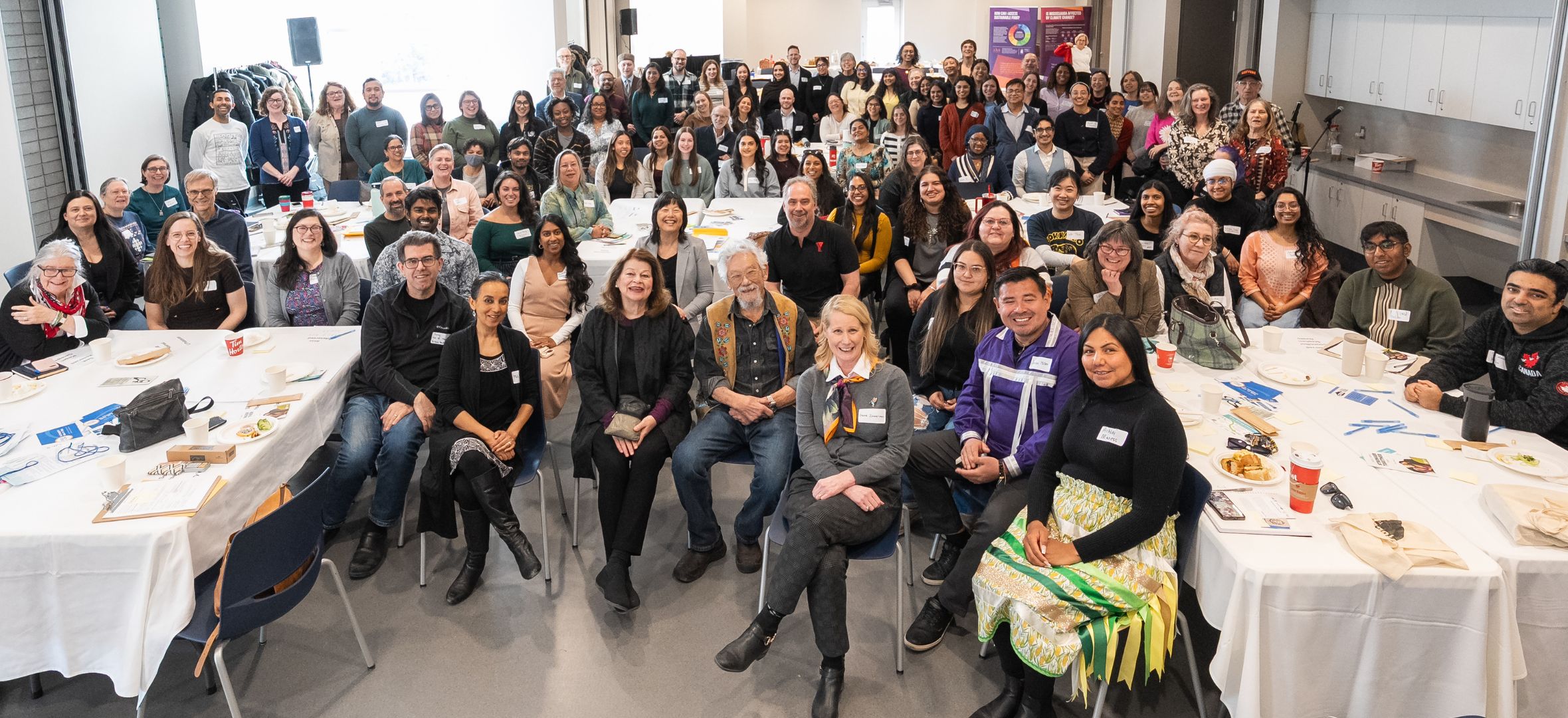
All told, nearly 800 people participated in the five events.
A space for celebration, conversation and connection
Each gathering began with a welcome from an Indigenous Elder or representative of the local nation. A municipal leader offered opening remarks too.
After a short activity to help participants consider their own community connections, the panel discussion began. It featured Tara Cullis, David Suzuki, Mili Roy from the Canadian Association of Physicians for the Environment and Ontario Climate Emergency Campaign, and Sheila Murray from Community Resilience to Extreme Weather. A local leader also joined the panel to give an insider’s perspective on the community’s strengths and needs.
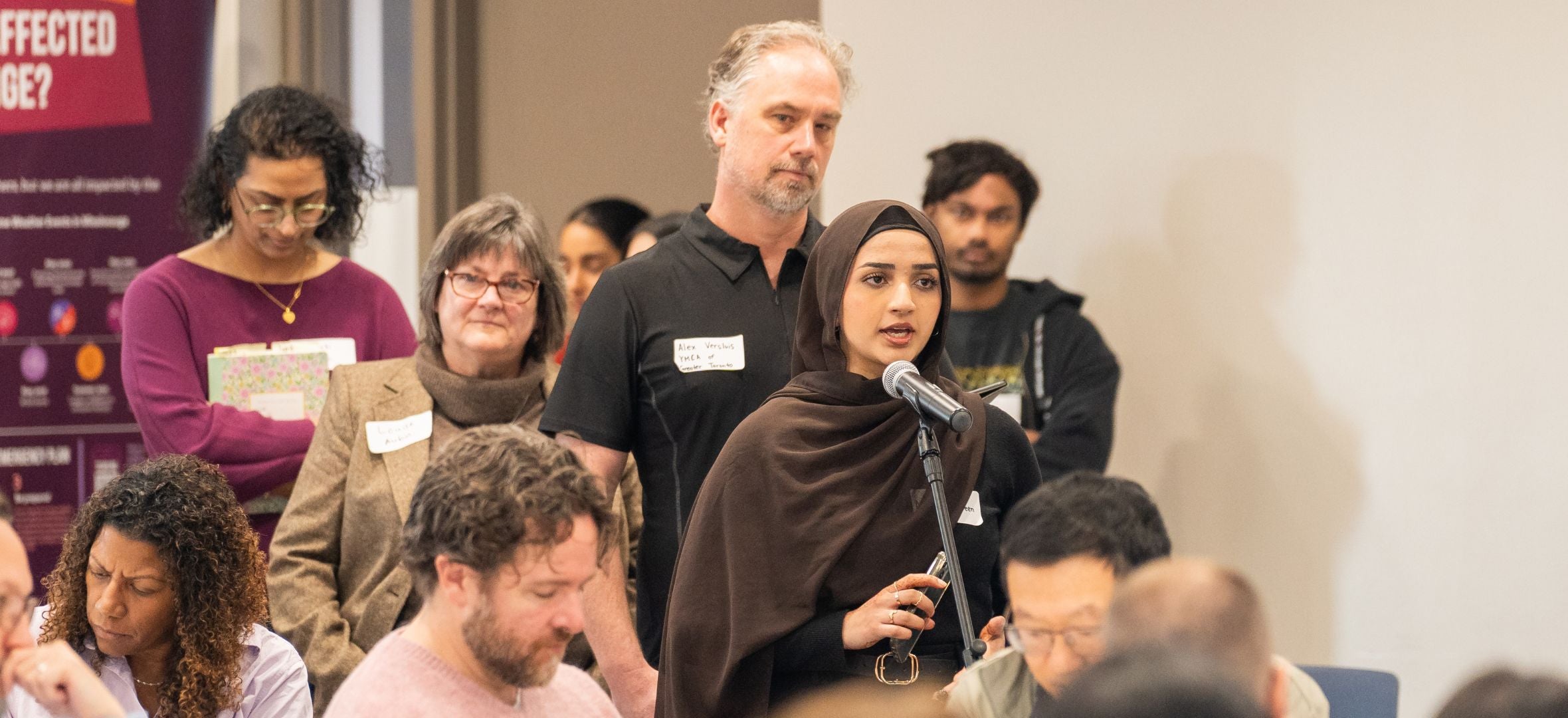
Participants were then invited to speak about their own work in community resilience and emergency preparedness. This “community spotlight” was always a highlight; at each gathering, 30 to 40 groups lined up at the mic to speak about their work. The audience was always eager to learn and connect.
Finally, participants broke into groups for a round of Resilientville, a role-playing exercise that invites players to imagine themselves as neighbourhood stakeholders responding to a local emergency. (Due to space limitations in St. Catharines, participants received an extended panel discussion and community spotlight in lieu of the game.)
What we learned and what comes next
At every tour stop, one thing was clear: participants were grateful for the chance to have these important conversations in person. And they wanted more. Organizers launched five region-specific WhatsApp groups where people could share their work and plan local initiatives. At each event, more than half of the attendees joined.
Although the tour wrapped in late March, conversations about community resilience continue in all five regions. It’s clear that people are hungry for opportunities to work together and prepare for what’s to come.
As this year is predicted to be one of the hottest on record (alongside a “super” El Niño event), that connection might well be our greatest strength.