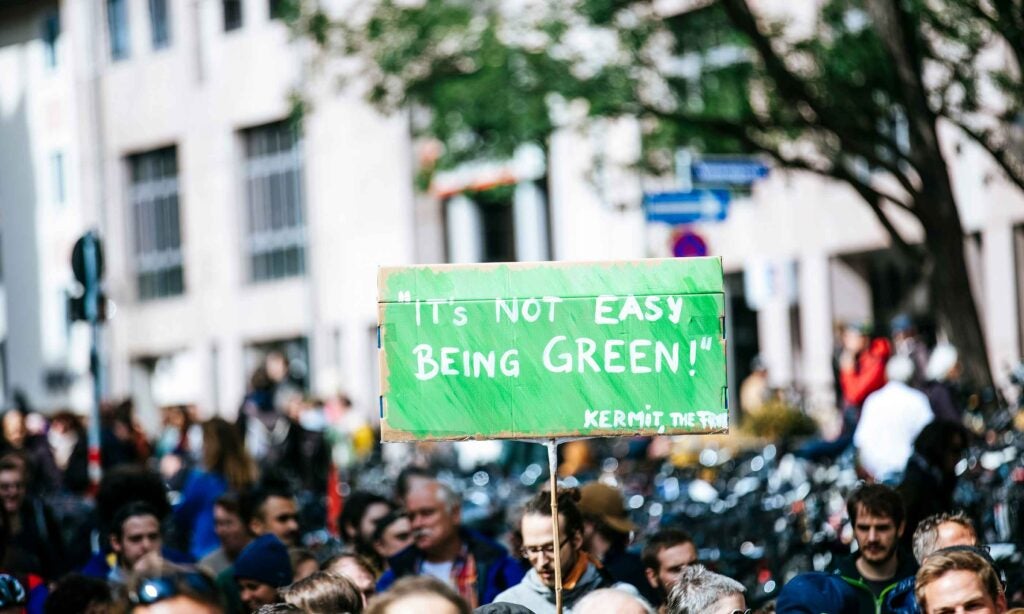
I bet a lot of people reading this don’t think of themselves as environmentalists.
Maybe because you shop on Amazon.
Maybe because you drive everywhere.
Maybe you buy the cheapest groceries you can.
I never used to think of myself as an environmentalist. It always used to feel like a test I had to pass and would likely fail.
You flew on a plane? You still eat meat? You own a gas-powered car? You ordered from Uber?
Disqualified!
When I joined the David Suzuki Foundation, I got those questions and more. Someone even asked me how I could justify bringing two kids into the world. It was as if I had to live perfectly sustainably before I earned the right to talk about fixing the problems.
Social media has intensified the problem. Emboldened by anonymity, people seek out hypocrisy and gotcha moments and feel entitled to audit others’ personal behaviour.
I get it — nobody wants to be criticized by someone who is just as imperfect as them.
Environmental movement disservice
And that’s where the environmental movement has done itself a disservice. By focusing on personal virtues, it has missed out on building the broad, imperfect coalition that would have put it years ahead of where it is now.
There’s no doubt the movement has also been about holding governments and corporations accountable and helping people find practical ways to live a little lighter on the planet.
too many people have come to believe they need to be perfect before they’re allowed to care.
The problem isn’t that personal actions don’t matter. It’s that too many people have come to believe they need to be perfect before they’re allowed to care.
Most people are not failing the movement. They are trying to survive inside impossible systems they did not design.
Do I feel guilty when I buy the cheaper strawberries because groceries somehow cost twice what they used to? Sure, I do.
Do I feel bad for ordering something online at 10 p.m. because I forgot about it during the chaos of managing our family? Sure, I do.
But I shouldn’t and neither should you. None of these moments make people immoral. They make us human.
How else are we supposed to survive the rising costs of everything, the limited time for anything outside of work, and navigating cities and lifestyles that are designed around driving and convenience?
Governments continue to weaken nature and climate policies while approving highways, sprawl and fossil fuel expansion, and individuals are told the real problem is whether they remembered their reusable bag.
Corporations responsible for some of the most enormous environmental harm continue to post record profits while shifting responsibility onto consumers to solve the crisis through personal lifestyle choices.
If the environmental movement shames and blames individuals for not living a perfectly green life, it’s playing into the hands of the real architects of the crisis.
People rarely move toward movements that make them feel inadequate. They move toward movements where they feel welcomed, useful and hopeful. Where they can be imperfectly accepted for whatever they bring. Where there is still room for joy, community and ordinary human life.
Former U.S. president Barack Obama once said, “There’s room for everybody here. That, I think, is where we win.”
There’s room for everybody here. That, I think, is where we win. – Former U.S. president Barack Obama
Real social movements are messy. There has to be room for people who are still learning. For people who can’t afford the sustainable option. For people living in systems built around cars and convenience. For working parents who are barely keeping up.
Trying their best
For imperfect people trying their best.
Especially now — because climate change is no longer some distant future problem. It’s wildfire smoke in our cities and record heat. It’s flooded basements and insurance costs. It’s food prices and shortages.
We are going to need broad public support to navigate the climate emergencies that are coming. That requires people feeling like they belong inside the conversation.
You do not need to be a perfect environmentalist to care about the future. In fact, if you care at all, you probably already are one.
So, let’s come together and build something bigger: as ordinary people trying, imperfectly, to protect the future and each other. That’s where we win.