(Dan Leonard/Torstar )
When Donald Trump says Canada is mismanaging its forests, many Canadians instinctively dismiss the comment. It’s easy to roll your eyes at another broadside from the U.S. president.
But that would be too easy — not because clearing dead trees and brush never makes sense, but because Trump’s call to “rake the forest” turns a complex problem into a simplistic slogan, one obviously designed to ignite his base. Managing a forest that stretches across nearly a third of the country is far more complex than the soundbite would suggest.
The real question Canadians should be asking is, “Are we managing our forests in ways that can make catastrophic wildfires more likely and more intense?”
Are we managing our forests in ways that can make catastrophic wildfires more likely and more intense?
The uncomfortable answer is yes.
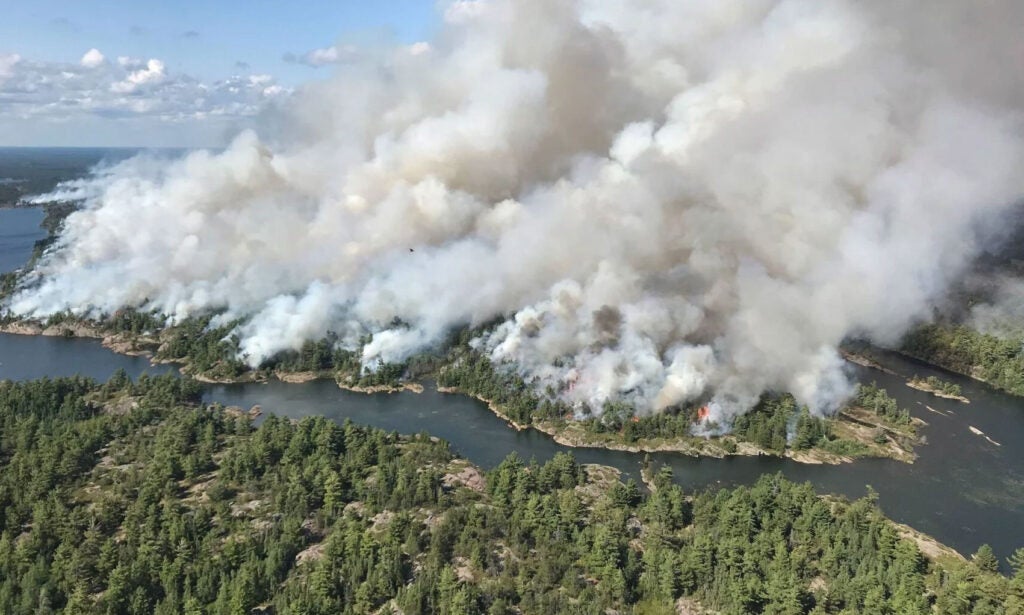
Canada’s wildfire crisis is being fuelled by two converging forces: a changing climate and decades of decisions about how we manage forests and fire.
For years, Canada has aggressively suppressed wildfires. Of course we want to protect communities, but extinguishing many naturally occurring fires that pose little risk to people has also had unintended consequences.
It creates what scientists call the “fire paradox”: suppressing fires today can contribute to larger, more severe fires tomorrow, thanks to the accumulation of dead wood, vegetation and other fuels. In places like British Columbia’s dry southern valleys, a century of supressing the natural and common low-severity fires has helped contribute to the past decade’s high-severity fires.
Then, there’s our unrelenting pursuit of industrial logging. The leftover branches, treetops and stumps can become dry fuel, while dense young conifer plantations that often replace older forests are generally more flammable. Meanwhile, industry sprays herbicides like glyphosate to control fire-resistant broadleaf trees like aspen in favour of more profitable species like pine, which have evolved to burn in high severity fire. Plus, building logging roads can also open up forests, reducing cover and drying them out, not to mention making it easier for people to access forests and accidentally ignite fires.
Older forests are often incorrectly portrayed as wildfire liabilities. In fact, in some forest types, mature forests can retain moisture beneath their closed canopies and limit growth of vegetation that could carry flames upward. Some of Canada’s old-growth forests are old precisely because they are naturally less prone to severe fire.
Climate change adds another complication to the conditions facing forests in Canada and around the world. With temperatures rising, droughts and other extreme weather events are becoming more frequent and more severe, leading to conditions where fires may ignite more easily and spread more quickly. Even with the best forest management practices, if we don’t meet our climate targets, forests in Canada are going to continue to burn.
That’s why simplistic solutions, including Trump’s calls to remove debris, fall short of the complex realities of the situation. A comprehensive response includes reducing excess fuel where it makes sense. Expanding prescribed burns. Supporting Indigenous-led fire stewardship. Restoring and maintaining healthier, resilient forests.
A comprehensive response includes reducing excess fuel where it makes sense. Expanding prescribed burns. Supporting Indigenous-led fire stewardship. Restoring and maintaining healthier, resilient forests.
Instead, what we see happening is the government following industry’s lead in using wildfire as justification for increased logging in healthy forests, where the focus is not reducing fire fuels and severity but mature, valuable, trees. Removing more trees isn’t necessarily the answer. We need to figure out how to ensure forests support biodiversity, store carbon and remain resilient in the face of climate change.
It’s time for Canada to be asking harder questions. How do we simultaneously reduce wildfire risk and protect ecosystems? How do we better apply Indigenous knowledge? How do we keep our homes and communities safe? How do we move beyond managing for short-term logging toward ensuring forest stay resilient over the long term? And how to we tackle climate change, which is making every wildfire season exponentially dangerous?
And if President Trump truly wants to reduce the damage wildfires cause to people in the United States, he would do well to examine how his own climate action rollback has contributed to the hotter and drier conditions that have allowed these fires to thrive.
Trump speaks in soundbites not science, so it can be hard to take him seriously. But that doesn’t mean Canada shouldn’t seize the opportunity to have a serious conversation about forest management, because the next wildfire will only reveal what we failed to do.
This article was originally published in the Hamilton Spectator.

Our work
Always grounded in sound evidence, the David Suzuki Foundation empowers people to take action in their communities on the environmental challenges we collectively face.