Could a decision by Charles Darwin on how to best market his book On the Origin of Species have altered how humans see the world and our place in it?
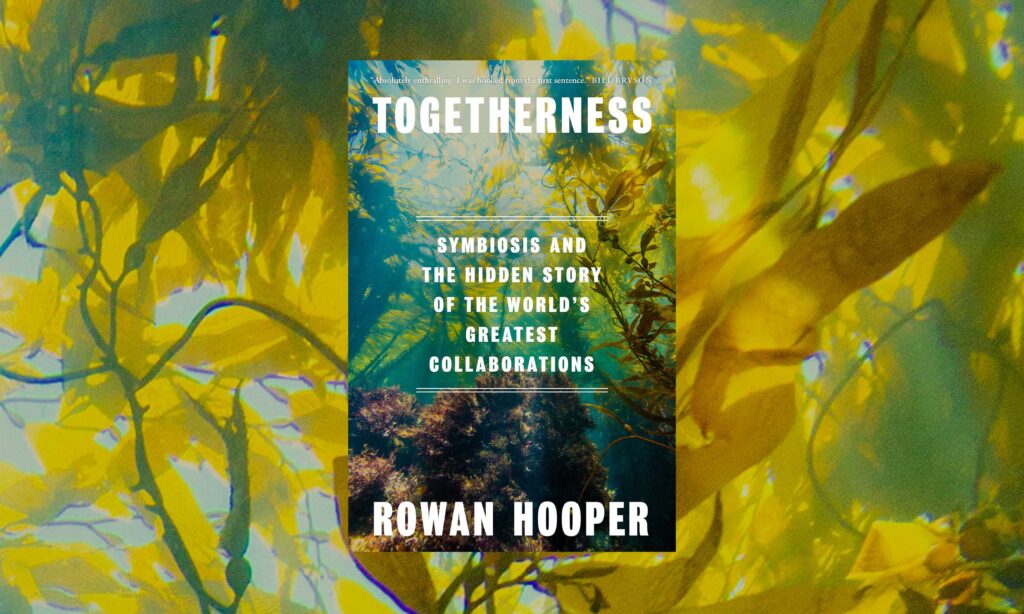
In Togetherness: Symbiosis and the Hidden Story of the World’s Greatest Collaborations, Rowan Hooper makes a convincing argument that this may well have been the case.
As Hooper writes, “[Darwin] was careful to craft his idea such that he delivered what he thought people wanted to hear, an account of nature as a competitive struggle, in a way they could make sense of.” Indeed, when we think of Darwin, we think of survival of the fittest and the ongoing struggle to pass on our genes when resources like food and space are limited.
Hooper argues that Darwin’s framing of his ideas worked too well and led to an emphasis on competition and individuality. There is no question that Darwin shaped our views on the origins of life on Earth. But is it possible we also took from it a sense of inevitability, that there is scientific justification that life is all about competition and a struggle to survive and therefore our capitalist, individualistic approach is simply survival of the fittest playing out.
Is it possible we also took from it a sense of inevitability, that there is scientific justification that life is all about competition and a struggle to survive and therefore our capitalist, individualistic approach is simply survival of the fittest playing out.
First though, Hooper makes the case that symbiosis (defined in the book as an association between two different species which is generally of mutual benefit) is not as rare in nature as we might have initially thought. The issue is that the study has taken a back seat to competition as a process in ecology. In Part 1 of the book, we are introduced to symbiosis as a key process underpinning all the organisms on Earth. From ants, lichens, sea slugs and corals, we are given an understanding of the interdependence of organisms and that many could not survive without one or more of the symbiotic relationships they’ve formed with other species. Hooper describes partnerships that have been built and refined over 80 million years, shaping Earth’s biodiversity. Every species of fig, for example, has its own species of pollinating wasp, where only the right wasp can get inside to pollinate the fig. If figs are not pollinated, they will turn brown and fall. If the wasp cannot get inside its matching fig, it cannot reproduce. Figs are a keystone species that hold an ecosystem together because of the number of species that rely on them. Here we realize the fragility of nature, and the risk to many if you take even one species out of the equation.
In Part 2, Hooper presents his theory about Darwin shaping our views about life as competition. He supports his central thesis by providing evidence from writers such as Michelle Meagher, who suggested that many of our assumptions about the benefits of the free market are myths based on 18th-century thinking. Meagher goes on to say that “the faith we place in competition to benefit us all and to disperse power throughout the economy is the critical blind spot that lies unexamined within capitalist doctrine.”
In Part 3, Hooper calls for a societal and scientific corrective informed by what we have learned since Darwin about how nature works. Indeed, even Darwin understood the mutual benefit between species and ends On the Origin of Species by writing about the complex interconnection between species. Recognition of this dependency and interconnection matters now more than ever. Without an understanding of interdependencies, we cannot understand how to rectify many of our most pressing challenges, ranging from sustainable agriculture to climate change. Rewilding as a concept is given space in the concluding section. Rewilding efforts that recognize the connection between species have yielded not only large biodiversity returns which in turn can buffer against extreme events but also result in reductions in fertilizers and pesticide use (their overuse and the problems associated with this are also broadly discussed).
Rewilding efforts that recognize the connection between species have yielded not only large biodiversity returns which in turn can buffer against extreme events
In Togetherness, Hooper is urging us to rethink the meaning of an individual: that there is in fact a scientific basis of connectedness, and that failing to see this has set up our philosophic and economic systems in a way that is no longer serving us. In doing so, he joins other scientists and advocates including Indigenous people, calling for all of us to start building our relationship with nature and to start recognizing that we are nature. And because we are part of this complex web of symbiotic creatures shaped and powered by symbiosis, we should work toward supporting functioning systems based on symbiotic principles of mutual gains for the state and the people.

Our work
Always grounded in sound evidence, the David Suzuki Foundation empowers people to take action in their communities on the environmental challenges we collectively face.