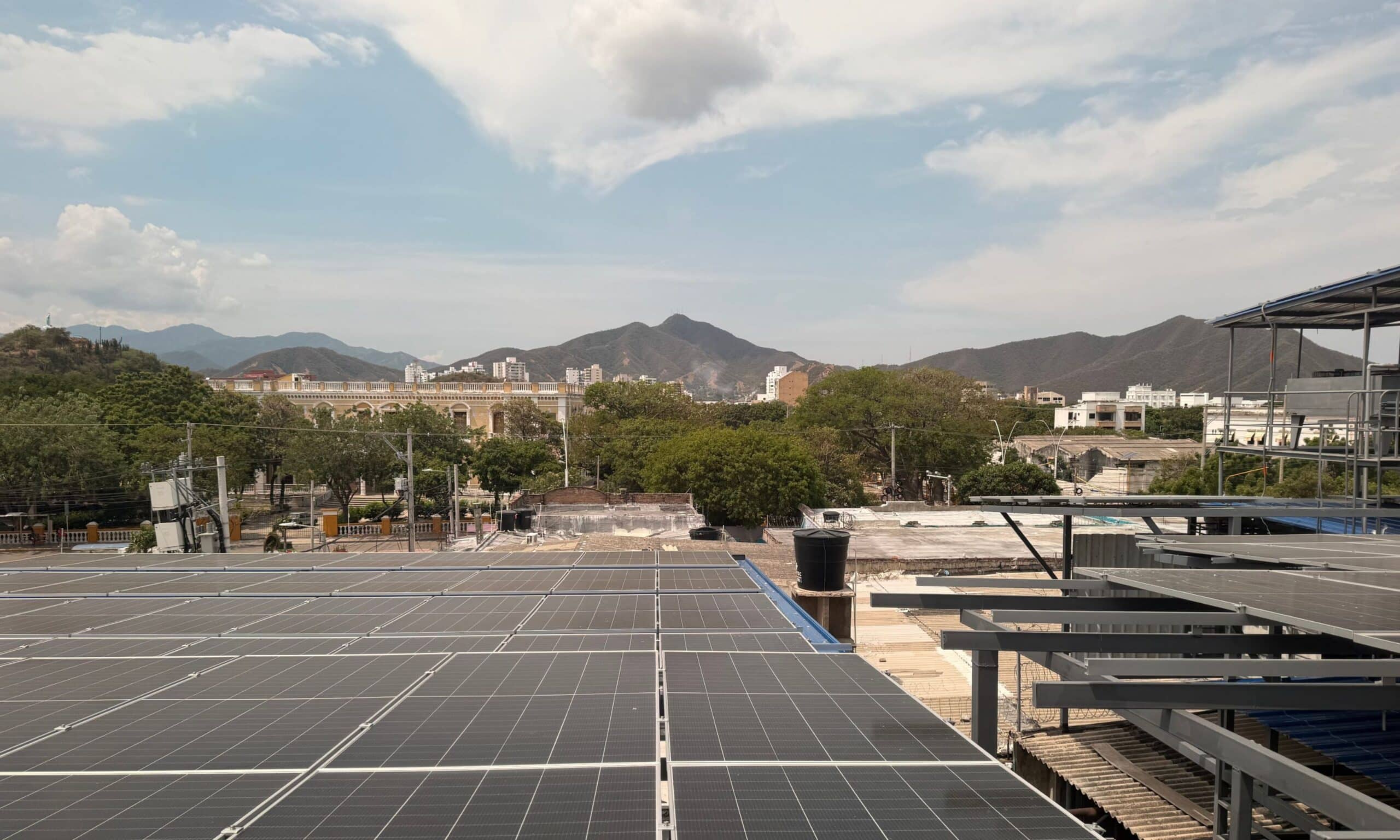
Solar panels pictured in Santa Marta, Colombia. (Photo: Sabaa Khan, David Suzuki Foundation)
One of the first conversations I had after landing in Santa Marta, Colombia, for the Transitioning Away from Fossil Fuels conference was with a Malaysian delegate.
“Your prime minister, I’ve been following him since he was head of the Bank of England,” he said. “His words used to be the received word on how we need to act on climate change. Now he’s expanding fossil fuels.”
The conference was unprecedented. The governments of Colombia and the Netherlands assembled nearly 60 nations — representing a third of global GDP — willing to do what 30 years of official United Nations climate talks have largely failed to accomplish: speak plainly about coal, oil and gas as the climate culprits they are. Countries with a track record of blocking climate action were not invited.
Given Ottawa’s enthusiasm over the past year for new pipelines, liquefied natural gas terminals and additional subsidies for oil and gas, Canada was fortunate to receive an invitation at all. The hosts might have reconsidered had they seen the news when I landed: Ottawa had just approved the $4 billion Sunrise fracked gas pipeline in southern British Columbia.
The mood in Santa Marta? Resolve and an optimism I hadn’t seen at climate gatherings before. A woman from “Cancer Alley” in Louisiana described refineries built on former plantations, linked to some of the highest cancer rates in the country. Her community was done with the jobs argument. They saw their future beyond fossils, in technologies that don’t sicken people.
The governments of Colombia and the Netherlands assembled nearly 60 nations — representing a third of global GDP — willing to do what 30 years of official United Nations climate talks have largely failed to accomplish: speak plainly about coal, oil and gas as the climate culprits they are.
The new economics of renewables, batteries and electrotech such as electric vehicles and heat pumps kept surfacing as the decisive argument. An Asian energy expert described how Vietnam’s largest conglomerate had scrapped a planned 4.8-gigawatt LNG facility in favour of renewables. Variants of this story emerged throughout the conference.
Canada’s misalignment was only partially visible to other delegates. Ottawa sent a single representative, without support staff. She was the only speaker at the welcoming reception to avoid the term “fossil fuels” — despite its presence in the conference name, on banners at every venue, on every piece of conference material. Panama’s special representative on climate change, Juan Carlos Monterrey Gómez, had no such hesitation: “Fossil fuels are not just dirty. They are unreliable, they are dangerous and they must end.”
Back home, as if to undermine the work happening a day’s flight to the south, Ottawa announced a sovereign wealth fund, getting Norway’s celebrated model backwards. Norway took oil and gas revenues and invested them for its citizens’ future, building an endowment now worth over C$3 trillion, restricted from investing in oil and gas. Canada’s version proposes funnelling public tax dollars into subsidizing oil and gas projects — and asking Canadians to put their personal savings into the same losing bet. Meanwhile, Canadian taxpayers are already on the hook for abandoned wells still leaking methane across the prairies.
Whatever the crisis, the conclusion in Ottawa, Alberta and Big Oil’s boardrooms is always the same: more oil and gas exports. Russia’s invasion of Ukraine? Export more LNG to Europe. Trump’s trade war? Time to diversify export markets — which apparently means subsidizing more oil and gas infrastructure so companies linked to Trump’s billionaire backers can make off with the profits. The Iran conflict threatening Hormuz shipping lanes? Build more LNG terminals. The rationale shifts with the headlines; the answer never does.
The Iran conflict threatening Hormuz shipping lanes? Build more LNG terminals. The rationale shifts with the headlines; the answer never does.
What Ottawa isn’t registering is that the ground is shifting beneath us. The club of countries working to get off fossil fuels will keep growing as Santa Marta’s outcomes ripple outward. The economics are ruthless: Canada’s oil and gas now faces leaner, cleaner competitors undercutting the business model whether Ottawa notices or not. People living in Canada feel the same pull: 72 per cent want their government to invest in a renewable electricity grid.
The next gathering is in Tuvalu in 2027, co-hosted with Ireland. Canada needs to genuinely show up — not as an awkward guest trying to avoid the topic but as one of the world’s top five oil and gas producers willing to acknowledge what that means and commit to a different path. That means stopping the approvals that lock in new emissions for decades. It means empowering our delegation to name fossil fuels plainly and collaborate on solutions. Not just because it dials down the heat, but because the technology trends, the economics and the smart money all point to our fossil fuels shedding both market share and acceptability.

Our Work
Always grounded in sound evidence, the David Suzuki Foundation empowers people to take action in their communities on the environmental challenges we collectively face.