Pacific herring used to spawn in great numbers in the southern Strait of Georgia. That’s no longer true. The federal government needs to pay attention.
Pacific herring used to spawn in great numbers in the southern Strait of Georgia. That’s no longer true.
The southern Strait of Georgia was historically a prime hot spot for herring spawning. Archaeological records show that herring have consistently been the most ubiquitous fish across multiple sites in the southern strait, demonstrating yet again not only the importance of the species to the Indigenous people of the area, but also suggesting that historical abundance in the region was consistently high.
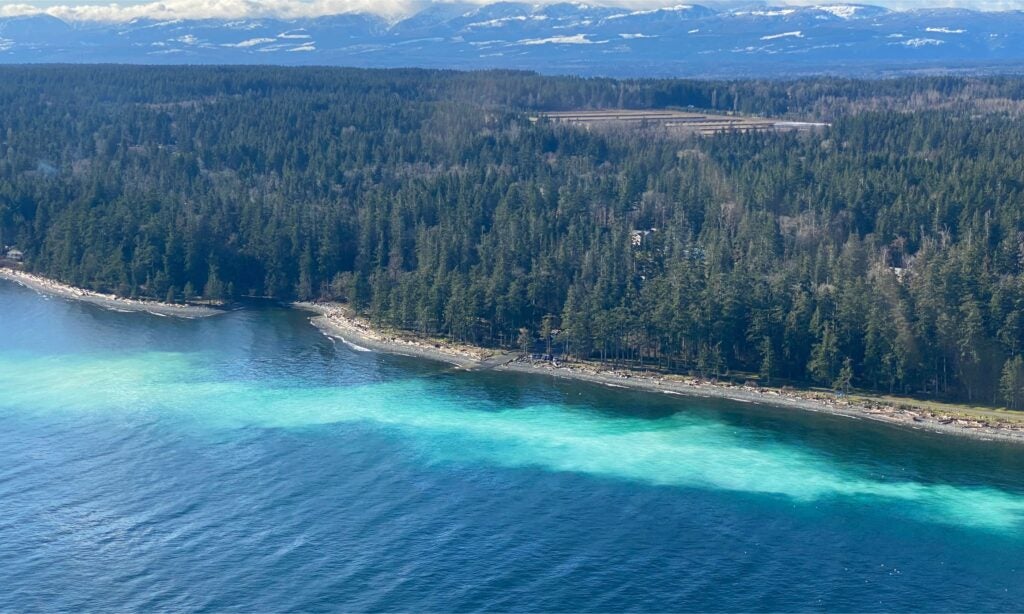
Now, however, herring spawning has largely collapsed south of Ladysmith and on the mainland side of the strait. Even in “good” years, when Fisheries and Oceans Canada (DFO) estimates that spawning around Denman and Hornby islands is relatively high, there has been no sustained, meaningful rebuilding of previous spawning levels in the southern strait or in the mainland inlets. As a result, this vast region — which used to host dozens of spawning events, each teeming with marine life — now sees only a handful of scattered spawns in any given year.
At the same time, new levels of spawning are being observed on the northern edge of the last remaining herring spawn hotspot in the strait , including in areas that have not hosted significant spawning since modern record-keeping began.
Nobody disagrees that the southern strait used to host massive levels of spawning, and nobody disputes that this spawning has largely ceased. DFO’s own science clearly shows these trends.
Nobody disagrees that the southern strait used to host massive levels of spawning, and nobody disputes that this spawning has largely ceased. DFO’s own science clearly shows these trends.
However, DFO continues to manage the herring fisheries as if these changes have not occurred. When the department makes its fisheries decisions, it is only considering total biomass estimates for the entire strait. Even if herring spawn only in a small area in the northern strait, leaving much of their former spawning range empty, DFO can and will assign it a “healthy” status as long as their model estimates that total herring biomass is sufficient, Thus, year after year DFO makes its fisheries decisions without considering how herring spawning has changed or identifying the reasons why it has changed. Perhaps even more importantly, DFO does not ask if these changes are continuing and what might happen to the strait’s herring if they are.
By ignoring spawning change, DFO is essentially hoping for the best. It is hoping that the loss of spawning in the southern Strait doesn’t mean that irreplaceable local populations have been lost. It is hoping that the concentration of spawning in a generally smaller area won’t increase the chance of a sudden collapse. It is hoping that if herring continue to move north, they will be able to find good spawning habitat in new areas. And it is hoping that whatever has driven herring out of the southern strait – fisheries, warming waters, predators, something unknown, or a combination of these – won’t eventually drive them out of the northern strait as well.
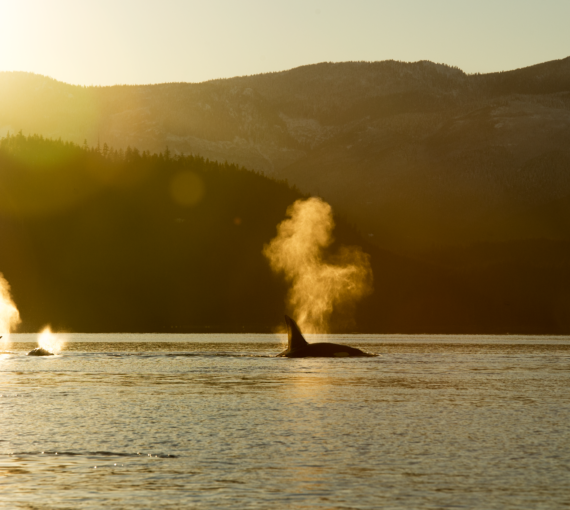
When it comes to the strait’s herring, hoping for the best is not enough. The Strait of Georgia is home to marine species that are iconic, not just for Canada but around the world. Chinook salmon, humpback whales and the legendary southern resident killer whales, or orcas, and many others depend directly or indirectly on the strait’s herring.
When it comes to the strait’s herring, hoping for the best is not enough. The Strait of Georgia is home to marine species that are iconic, not just for Canada but around the world. Chinook salmon, humpback whales and the legendary southern resident killer whales, or orcas, and many others depend directly or indirectly on the strait’s herring.
But the strait’s herring are clearly stressed. They are no longer in their old spawning habitats. They may be entering new habitats. Fisheries and Oceans Canada can no longer ignore this reality. It must dedicate its herring science and management to understanding and addressing the massive and potentially ongoing changes we’re seeing in the Strait of Georgia’s herring spawn.
*The article was updated to provide further details on spawning location changes of the strait’s herring.
Our work
Always grounded in sound evidence, the David Suzuki Foundation empowers people to take action in their communities on the environmental challenges we collectively face.