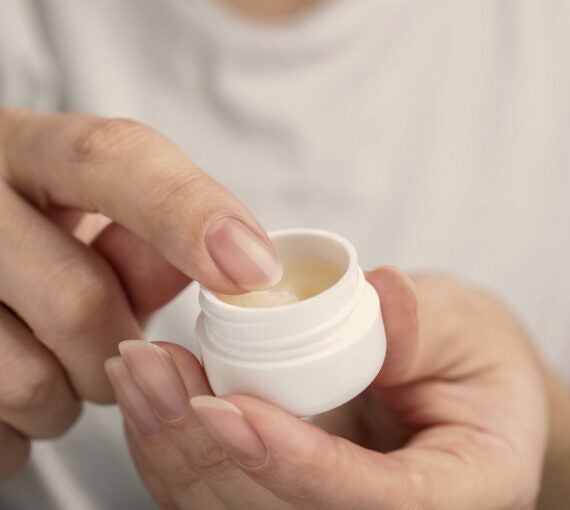
PEG compounds are found in an array of personal care products, including toothpaste.
Petroleum-based polyethylene glycol (a.k.a. polyethylene oxide and polyoxyethylene) is a chemical industry workhorse. It has many industrial, biological, medicinal, food and commercial uses. Hundreds of thousands of tonnes of PEG are produced each year. It’s used in shampoo, lotion, skin cream, dental floss, toothpaste, personal lubricant and shaving cream.
Colourless, odourless and non-toxic, PEG is highly soluble, making it ideal for pharmaceuticals and scientific applications. It’s an ingredient in laxatives and acetaminophen. It’s found in the mRNA COVID-19 vaccines developed by Moderna and Pfizer. PEG is also used as a preservative for water-logged wood. It helped salvage the 64-gun Swedish war ship Vasa, retrieved in 1961 after sinking in the Baltic Sea in 1681.
Health and environmental hazards of PEG compounds
Human health risks and concerns
Because it’s non-toxic, PEG is often used in personal care products and pharmaceuticals. It’s not associated with cancer risks, fertility damage or fetal damage. But PEGs are penetration enhancers, which make it easier for other, potentially toxic ingredients in the same product to pass through the skin.
PEG may also trigger anaphylaxis or hypersensitivity. People with those reactions are often sensitive to processed foods, cosmetics or drugs manufactured with or that contain PEG. Hypersensitivity has increased since COVID-19 vaccinations began. It’s also associated with echocardiography in which PEG is used as an ultrasound enhancing agent. The United States Food and Drug Administration reported 11 PEG-related anaphylaxis cases and two deaths in 2021.
Used for constipation, PEG may cause side effects such as gas, nausea and abdominal cramping. Allergic reactions are rare, but may include a rash, face and/or tongue swelling, dizziness and trouble breathing. All require immediate medical attention.
People will encounter PEGs when using personal care products. But the concentration is below the level which would raise concerns about harmful effects.
The main concern with PEG is that it’s derived from ethylene oxide in a process called ethoxylation. This may result in contamination from ethylene oxide and 1,4-dioxane — both carcinogens. Neither are intentionally added to products, which means that neither will be listed on ingredient labels but could still be present. If ingested, ethylene glycol is poisonous to the kidneys.
In manufacturing, workers must be trained to handle PEG and limit exposure by wearing gloves, goggles and mask.
Environmental risks and concerns
Testing shows that PEG is unlikely to persist in the environment. It biodegrades, doesn’t bioaccumulate in the food chain — so there’s little human exposure — and isn’t toxic to aquatic organisms. But the raw materials used to produce it are byproducts of petroleum refining and derived from non-renewable sources like gas and coal.
Regulatory status of PEG compounds
Current regulatory status of PEG compounds in Canada
PEG is governed by Government of Canada Food and Drug Regulations. They list the chemical as an approved food additive. Due to possible allergic reactions, Canadian regulators issued an advisory after two people in the U.K. reacted to Pfizer BioNTech’s COVID-19 vaccine in 2020.
Current regulatory status of PEG compounds in other countries
The U.S. Food and Drug Administration approves PEG as a food additive. It may be safely used in food. PEG is also authorized as a food additive in the European Union. It’s not considered a “hazardous chemical” by the US Occupational Safety and Health Administration Hazard Communication Standard.
Function of PEG compounds
PEGs act as thickeners, solvents, softeners, humectants, emulsifiers, skin condition agents and surfactants in cosmetics and other personal care products. They enhance the fragrance of perfume and improve the solubility of drugs. They’re used as a lubricating coating for different surfaces, including gels for lubricating artificial joints, which helping extend their service life.
PEG is used as a laxative under the generic name macrogol. (The name is often followed by a number that indicates its molecular weight, such as “macrogol 4000.”) It’s also used for bowel preparation before surgery, for colonoscopies or given to constipated children.
Because of its low toxicity, PEG is used in a variety of food products to add texture, taste and thickness. It’s also used as a plasticizer in film‐coating formulations for food supplement tablets and capsules.
How to avoid PEG compounds
What to look for on labels
PEG compounds are listed on product labels as:
- PEG followed by a number, such as “PEG-40.”
- PEG followed by a number and then another ingredient name, such as “PEG-20 cocamine.” This represents a complex PEG compound.
- Complex PEG compounds can appear with other ingredients, often containing many slashes in the names. They’ll always contain PEG e.g., BIS-PEG/PPG-16/16 PEG/PPG-16/16 Dimethicone.
Commonly used brand names for constipation medications containing PEG include:
- PegaLAX
- PureLax
- Relaxa
- RestoraLAX
- MiraLAX
- GlycoLax
- Lax-A-Day
Substitutes
PEG-containing laxatives don’t work for everyone. Non-PEG alternatives include Citroma, Milk of Magnesia and Citrucel. There are also plant-based fibre supplements that work on the digestive system. Bulk-forming laxatives or fibre supplements like FiberCon, Metamucil and Citrucel are generally safe for long-term daily use.
For other personal care items, look for certified products that don’t allow PEGs.