(Photo: Mark Wunsch via Greencoast Media)
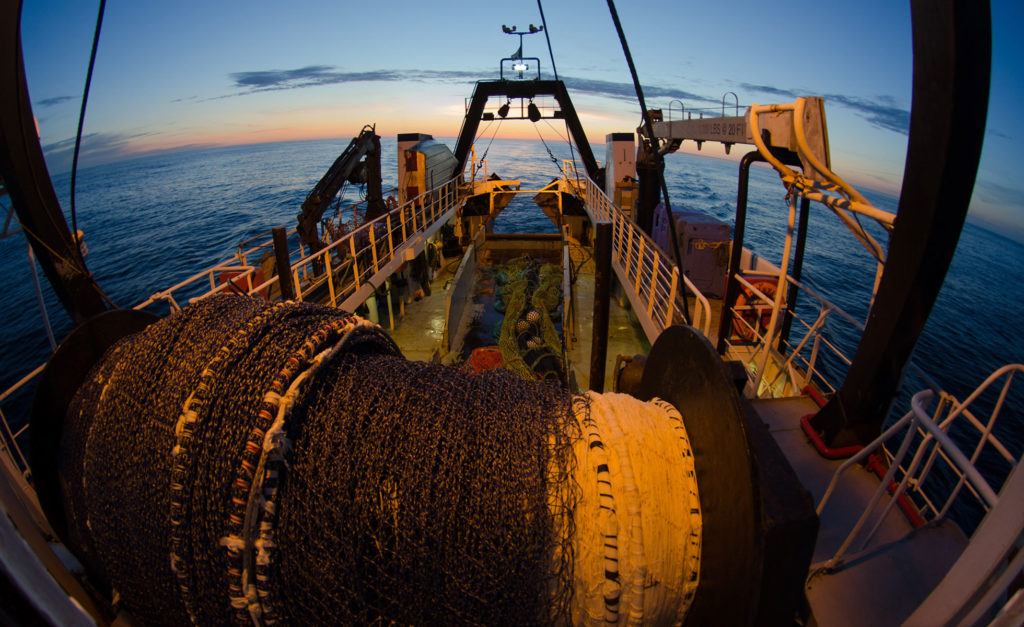
For years, British Columbia’s midwater trawl fishery has been unintentionally catching Chinook salmon. Unlike bottom trawls, which are meant to be dragged over the seafloor, midwater trawls are meant to stay off of the seafloor. In theory, this allows boats to catch fish with reduced impacts on habitat and unintended species (i.e., “bycatch”). For this reason, many in the conservation community have long called on trawl fisheries to transition from bottom trawl to midwater gear. However, unintentional catch can still occur. Even though the midwater trawl fishery can’t retain Chinook for sale, this bycatch is still concerning.
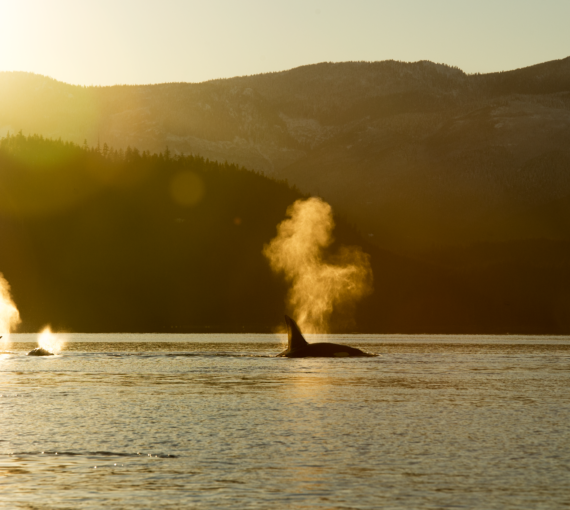
Chinook salmon are the largest-sized Pacific salmon species, with populations returning to spawn in watersheds across the province, as far as the Alberta border. Most Chinook salmon runs to southern B.C. rivers are depleted, threatened or endangered, including the big and fatty stream-type “spring” Chinook that are a critical food source for endangered southern resident killer whales, or orcas. Chinook salmon are also one of the most prized salmon caught by First Nations food fisheries, recreational anglers and commercial fishers.
Most Chinook salmon runs to southern B.C. rivers are depleted, threatened or endangered, including the big and fatty stream-type “spring” Chinook that are a critical food source for endangered southern resident killer whales
Several years ago, the David Suzuki Foundation raised the Chinook bycatch issue via our seat on the Groundfish Trawl Advisory Committee, where we provide advice on the fishery’s management. We worked with Fisheries and Oceans Canada, GTAC and catch-monitoring service providers to initiate a new, dedicated monitoring and data collection program for salmon bycatch on bottom and midwater trawl boats. This salmon-specific effort was in addition to, and made possible by, the groundfish fishery’s long-standing mandatory monitoring of all at-sea catch (via electronic monitoring) and all retained catch offloaded at the dock.
After several years of considerable monitoring by Fisheries and Oceans, the trawl fleet and service providers, the details of the fishery’s Chinook bycatch came into focus — not just how many were being caught, but their stock identity and where and when they were being caught. We learned that while the average estimated Chinook bycatch was approximately 6,500 fish per calendar year from 2008 through 2020 (ranging from 2,211 to 9,753), it jumped substantially in the years 2021 (12,255 fish), 2022 (22,033) and 2023 (26,091) (reference).
As a result, Fisheries and Oceans and GTAC, including the David Suzuki Foundation, developed management measures to reduce and control the unintended Chinook catch. This included implementation of a mandatory annual fleetwide cap of 9,500 Chinook. This total amount is divided among vessels in the fleet, so that each vessel has an individual limit on its Chinook bycatch. (One hundred per cent at-sea electronic monitoring of this fleet’s catch was already in place.) Although a vessel that exceeds its limit can offset it by acquiring amounts from another, this transfer is limited so that no one vessel can hold more than 10 per cent of the fleet’s total — an important detail that prevents any one vessel from taking a vastly disproportionate share.
The fleetwide cap and individual vessel limits were put into place for the February 2024 to February 2025 trawl fishing year. DFO has now released details of the trawl fleet’s unintended Chinook bycatch under this first year of dedicated management measures. These show that Chinook bycatch was reduced from an average of more than 24,000 fish per year in the two previous trawl fishing years to 7,040 in the 2024-25 trawl fishing year. (Note that the year runs from February to February.) (https://waves-vagues.dfo-mpo.gc.ca/library-bibliotheque/4131542x.pdf)
This is a substantial reduction from the levels of the previous two years and is lower than the fleetwide 9,500 Chinook limit, implying that the measures were successful in their first year. However, the 2024-25 Chinook bycatch was similar to levels reported for past years and therefore doesn’t necessarily represent a substantial reduction relative to long-term modern averages.
So, is the problem fully solved? It has clearly improved from where it was in the last several years. In the 2023 calendar year, the Chinook bycatch spike to more than 26,000 fish represented approximately four per cent of that year’s total preliminary Chinook fishery mortality across all fisheries in B.C. After the new management measures, the 2024 calendar year saw only 6,072 Chinook caught in this fishery — reducing its relative contribution to total Chinook mortality. And with 100 per cent at-sea video-based monitoring already in place, we have a reliable method for understanding how many Chinook are being caught in this fishery — in contrast to other sectors that have little to no at-sea monitoring but catch a higher proportion of the province’s total.
Of course, this issue is not fully “solved” if the objective is to get as close to zero Chinook bycatch as possible. To this end, the financial disincentive of the individual vessel limits on Chinook bycatch is important. Every Chinook that a vessel unintentionally catches is counted against that vessel’s individual limit. If they exceed their limit, they have to acquire additional amounts from another vessel at a financial cost. Similar to the bottom trawl fleet’s coral and sponge vessel limits, which DSF co-negotiated years ago and which have contributed to an 89 per cent reduction in annual coral and sponge bycatch, the idea is that this financial disincentive instils a compelling reason for skippers to find ways to avoid Chinook. This is already driving innovation in the fleet, which has tested new net configurations and worked to understand how Chinook bycatch can be minimized by adjusting where, when and how they fish.
These new measures give a greater level of transparency and a higher degree of confidence that the trawl fleet’s Chinook bycatch issue is being effectively monitored and controlled.
These new measures give a greater level of transparency and a higher degree of confidence that the trawl fleet’s Chinook bycatch issue is being effectively monitored and controlled. Furthermore, the fact that only a few years were required to conduct the relevant science and implement the resulting management measures is a testament to importance of having key fundamentals already established for this fishery’s management — specifically, the fishery’s 100 per cent at-sea electronic monitoring, and its established use of quotas to control the catch of species of concern. Both of these management tools were necessary preconditions for the success of the Chinook bycatch measures. Taken together, these elements — at-sea monitoring, a method to ensure catch limits at the individual vessel level and collection of high-quality catch data — provide a sound example for how a specific conservation challenge can be effectively addressed in a fishery that catches Chinook salmon.

Our work
Always grounded in sound evidence, the David Suzuki Foundation empowers people to take action in their communities on the environmental challenges we collectively face.