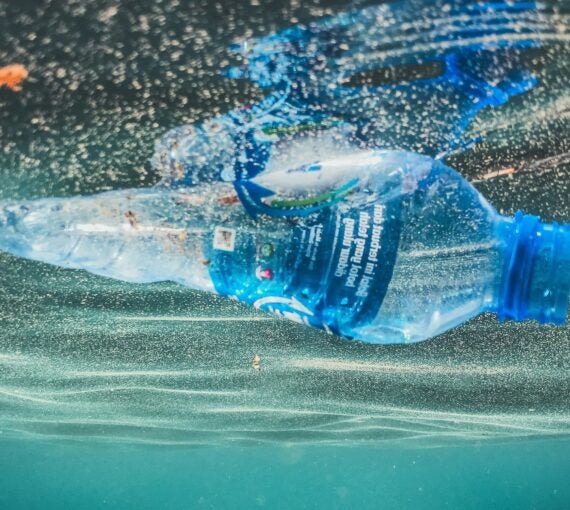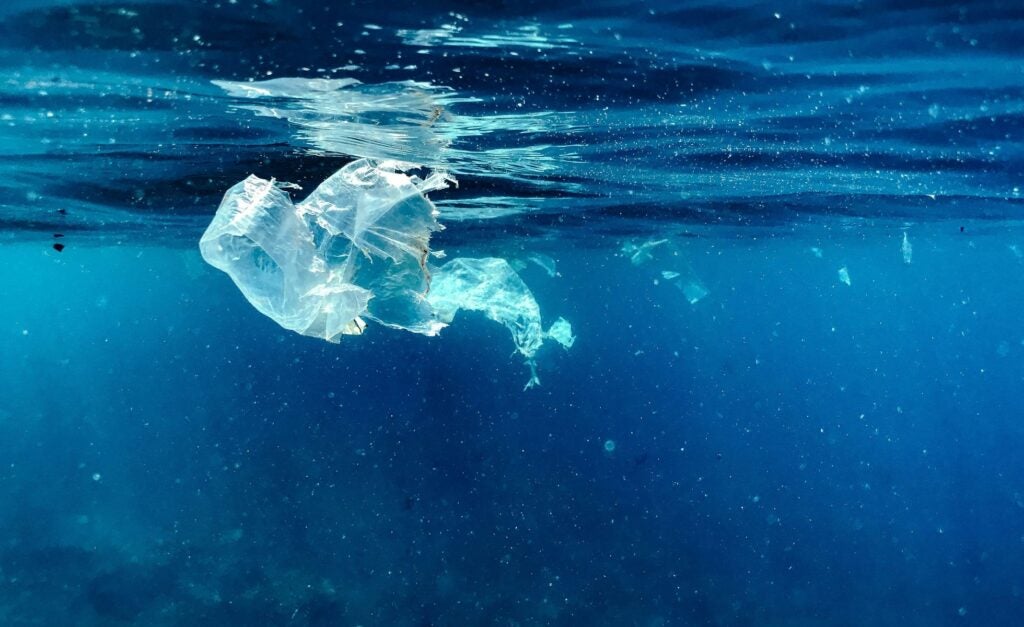
A final round of negotiations to adopt a global treaty against plastic pollution will take place in Geneva, Switzerland, from August 5 to 14, 2025. (Photo by Naja Bertolt Jensen via Unsplash)
On December 1, attention was riveted on the South Korean coastal city of Busan for what was supposed to be the final negotiating session to adopt a global treaty against plastic pollution. Because the main fossil fuel–producing countries have impeded progress, an additional negotiating session will take place in Geneva, Switzerland, from August 5 to 14, 2025.
Hopes were high for this multilateral agreement, which would be the first in the environmental field to be negotiated since the Paris Agreement 10 years ago. The work of the Intergovernmental Negotiating Committee on Plastic Pollution began in November 2022, in Punta del Este, Uruguay. The INC met in May 2023 in Paris, November 2023 in Nairobi and April 2024 in Ottawa, with the aim of developing a “legally binding international instrument on plastic pollution, including in the marine environment.”
As with the fight against climate change, the stakes are high, as plastic pollution is also considered a major threat to human and planetary health. According to the United Nations, “Every day, the equivalent of 2,000 garbage trucks full of plastic are dumped into the world’s oceans, rivers, and lakes.”
As with the fight against climate change, the stakes are high, as plastic pollution is also considered a major threat to human and planetary health.
It may be hard to imagine a life without plastic, yet the widespread use of this material dates back only to the 1950s, a decade during which it was touted for its many merits. Over the past 75 years, average annual global plastic production has risen from two to 460 million tonnes. According to projections, plastic use and production is set to triple by 2060 if no action is taken to limit them.
It’s commonly believed that plastics are easy to recycle, yet according to an Organisation for Economic Co-operation and Development report, only nine per cent of plastics are recycled worldwide. In fact, 19 per cent of plastic waste was incinerated, 50 per cent ended up in controlled landfills and 22 per cent was abandoned, burned in the open or released into the environment.
Plastic pollution, more commonly represented by aerial images of land and sea locations filled with plastics, is accompanied by “invisible” pollution that is just as serious. In a 2023 report, the United Nations Environment Programme revealed that more than 13,000 chemicals are used to produce plastic materials. The presence of these unregulated substances is dangerous for human health and the environment, and makes plastic recycling a complex process.It’s hard to turn away from plastic waste when it never really degrades. It’s even found in our bodies — in our brains, kidneys, blood and placenta. Scientists call microplastics and nanoplastics “invisible killers.”

The impact of plastic pollution on Indigenous communities
In an interview with the David Suzuki Foundation, Lynn Konwaia’tanón:we’s Jacobs explained, “Indigenous Peoples are disproportionately impacted by plastic pollution at all stages of the plastic life cycle, including extraction of fossil fuels on Indigenous lands, exposure to toxic emissions from production and recycling facilities, plastics in landfills, plastic exports and waste colonialism, exposure to fumes from open-burning practices and widespread circulation of macro- and microplastics in the natural environment, affecting traditional foods and the health of all species.”
In 2018, the International Energy Agency found that people living in rich countries consumed 20 times more plastic than people living in poorer countries. Countries such as Canada, however, have no qualms about “exporting” them.
We speak in particular of “waste colonialism,” which translates into “the idea that centres of power — historically, colonial powers — need the land of others not only to extract resources such as oil and natural gas, but also to use these resources and to make them sites for [waste] disposal,” as Max Liboiron explains in an interview with Radio-Canada.
With so much at stake, it’s natural to wonder who really benefits from plastic production. One industry is rubbing its hands at the idea of producing even more plastic than it does today: the oil and gas industry. In fact, 99 per cent of all plastic comes from fossil fuels such as oil and gas.
Oil companies are anticipating a drop in demand in their traditional markets, and are already investing heavily in petrochemical production. Petrochemicals alone are expected to account for almost 50 per cent of the increase in oil demand over the next 25 years.
The Guardian reported that, at the December plastic treaty negotiations, fossil fuel and chemical industry representatives outnumbered representatives from European Union countries and host country South Korea.
Plastic pollution, more commonly represented by aerial images of almost unrecognizable land and sea locations, is accompanied by “invisible” pollution that is just as serious.
These industry giants know they can also count on support from the group of self-proclaimed “like-minded countries,” which include Saudi Arabia, Iran and Russia. They are partly to blame for the failure of what was to be the final negotiating session at the end of 2024.
This failure was also reflected in the constant erasure of the voices of Indigenous Peoples and civil society. References to the United Nations Declaration on the Rights of Indigenous Peoples and human rights have been removed from the chair’s text, which will serve as the basis for this summer’s discussions.
It’s not too late to call on Canada to show leadership and demand a global treaty against plastic pollution.


Related projects
Always grounded in sound evidence, the David Suzuki Foundation empowers people to take action in their communities on the environmental challenges we collectively face.