Healing Forests can rekindle our understanding, love and respect for each other and nature
Throughout Canada, Indigenous and non-Indigenous communities, organizations, schools, faith groups and institutions are creating Healing Forests — forests, gardens and green spaces dedicated as places for healing, learning, sharing and reflection about Canada’s history and the legacy of residential schools. These community-led spaces honour Indigenous Peoples, support reconciliation, and invite people to reconnect with nature and one another.
Since 2022, the David Suzuki Foundation has partnered with the National Healing Forests Initiative to help communities establish Healing Forests across Canada. Together, we’ve supported dozens of community groups through webinars, networking opportunities, bilingual resources and practical guidance as they create locally meaningful places for healing and reconciliation.
How Healing Forests began
During a healing walk in Ottawa held alongside the release of the Truth and Reconciliation Commission’s final report in 2015, Patricia Stirbys and Peter Croal envisioned creating forested spaces dedicated to healing and reconciliation. That conversation became the National Healing Forests Initiative, which continues to inspire communities across Canada to create their own locally led Healing Forests.
Learn more about the National Healing Forest Initiative and its co-founders
By establishing a Healing Forest, anyone can take that first step to bring people together, help them reflect on this country’s tragic past and connect with nature and each other.
Patricia Stirbys, co-founder, National Healing Forests Initiative
What is a Healing Forest?
A Healing Forest can be a forest, garden or other green space dedicated to healing, learning, sharing and reflection. Some are newly created, while others begin with an existing natural area. They may include native plant gardens, medicine gardens, gathering circles, walking trails, outdoor classrooms or places for ceremony. Every Healing Forest is community-led and developed in the spirit of reconciliation, healing, shared understanding and respect.
Healing Forests throughout Canada
The National Healing Forests Initiative continues to grow as a national movement for reconciliation, healing and community. Working alongside the National Healing Forests Initiative and dozens of local partners, the David Suzuki Foundation has helped expand the network through bilingual resources, webinars, storytelling and community support. Today, the network includes 28 Healing Forests across Canada, with new sites continuing to emerge in communities large and small.
Every Healing Forest reflects its community’s unique vision. Some focus on Indigenous teachings and ceremony. Others emphasize ecological restoration, outdoor education, medicine gardens or quiet reflection. Together, they demonstrate that reconciliation can take many forms, while creating lasting places where people can deepen relationships with Indigenous Peoples, each other and the land.
A look inside existing Healing Forests. Get inspiration for your own!
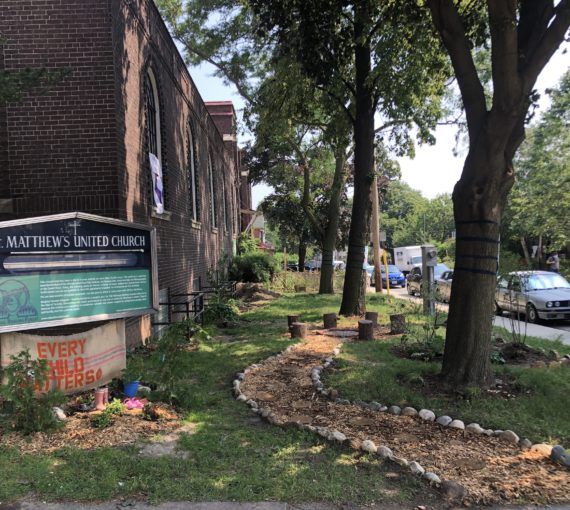
Noojimo’iwewin Gitigaan Healing Garden
Stewarded by members of the Indigenous Peoples Solidarity Group at St. Matthew’s United Church in Toronto, this small green space is home to more than 100 species of native plants. Both the land and the water are acknowledged in signage that situates the garden between the “lost rivers” of Taddle and Garrison creeks, and identifies the four sacred medicines – tobacco, sweetgrass, sage, and cedar – that grow here.
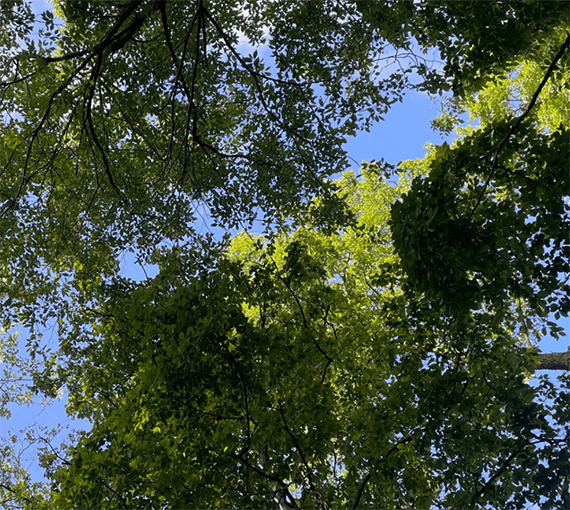
University of Waterloo Healing Forest
The University of Waterloo Healing Forest includes forests, meadows and Columbia Lake. These spaces have long supported teaching, research, and conservation. Designated as a Healing Forest in alignment with the University’s 2023-2028 Indigenous Strategic Plan, the initiative reflects commitments to decolonization, Indigenization, and reconciliation. In 2024, the University hosted an exhibit profiling the forest.
Learn more about the University of Waterloo Healing Forest.
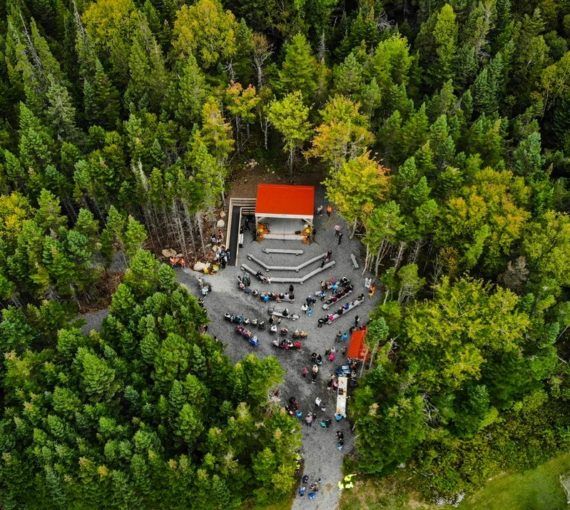
Riverside Knowledge Path
The Riverside Knowledge Path is tucked away behind Riverside School in Albert Bridge, Nova Scotia. An accessible gravel two kilometre walking path guides you through the surrounding Acadian forest. Read a book from the comfort of one of the wooden benches, gather in the Mawita’nej Learning Pergola or make music at the Sule’katike’l Sound Garden. The Path is home to a Healing Forest and a sharing circle, a space where students, staff and visitors can come together in the spirit of reconciliation.
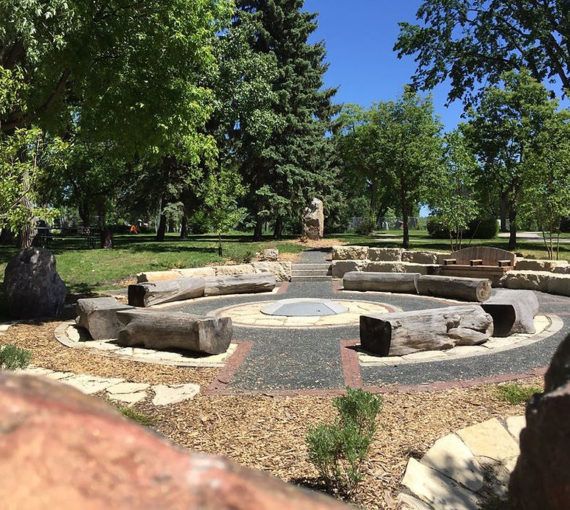
Kapabamayak Achaak Healing Forest
Located in St. John’s Park, Winnipeg, the Kapabamayak Achaak (“Wandering Spirit”) Healing Forest received its Spirit name as a gift from Peetanacoot Nenakawekapo, an Anishnaabe Elder. The gathering space, based on the medicine wheel, provides a place for quiet reflection and ceremony. A sacred fire pit is available. Four large grandmother stones mark the four directions. The steering committee is working with neighbouring schools and communities to develop a living curriculum to learn about medicine plants and Indigenous teachings.
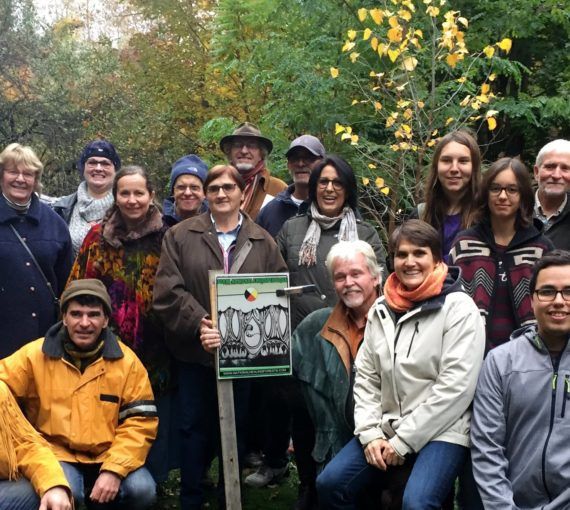
Fitch Bay Healing Forest
On October 7, 2018, the Fitch Bay Healing Forest was inaugurated with ceremony, respect, and community. It’s the first Healing Forest to be created in Quebec and on private land – another first. Its champion, Terry Loucks, established the forest on the two-and-a-half hectares he owns in order to preserve his spiritual ancestors’ legacy and heal people as it did him.
How to establish a Healing Forest
Since 2015, Indigenous and non-Indigenous communities have been coming together to develop their own Healing Forest ideas. The National Healing Forest Initiative has left it to communities to determine what their Healing Forest would look like and how it would function. The only proviso is that each Healing Forest be established and used in the spirit of reconciliation, healing, shared understanding, and respect.
For more information, check out the National Healing Forests Initiative FAQ page.
Expert Articles
New mining permits in Grassy Narrows show Ontario heading backward on reconciliation
The granting of eight new mining permits in the traditional territory of Grassy Narrows without consulting the nation or notifying the community, confirms Ontario is heading backward on their path to reconciliation.
Environment and culture activist and author and former David Suzuki Foundation Executive Director
This is the transformation decade
Last fall, the David Suzuki Foundation announced that I would be joining the team full-time this September as executive director. I write you today with a deep sense of excitement, responsibility and alignment for taking up this work.
Environment and culture activist and author and former David Suzuki Foundation Executive Director
St’ii kaa (COVID-19) sk’yanxan uu Xaayda kil gud ad t’alang kihlgul Sickness walking even still Haida language together we speak
Indigenous languages are a portal to a relationship with Earth.
Environment and culture activist and author and former David Suzuki Foundation Executive Director

Help nature thrive
When nature flourishes, we benefit. It’s up to all of us to make sure Canada’s party leaders know we must respect, protect and restore nature so it can sustain all life.