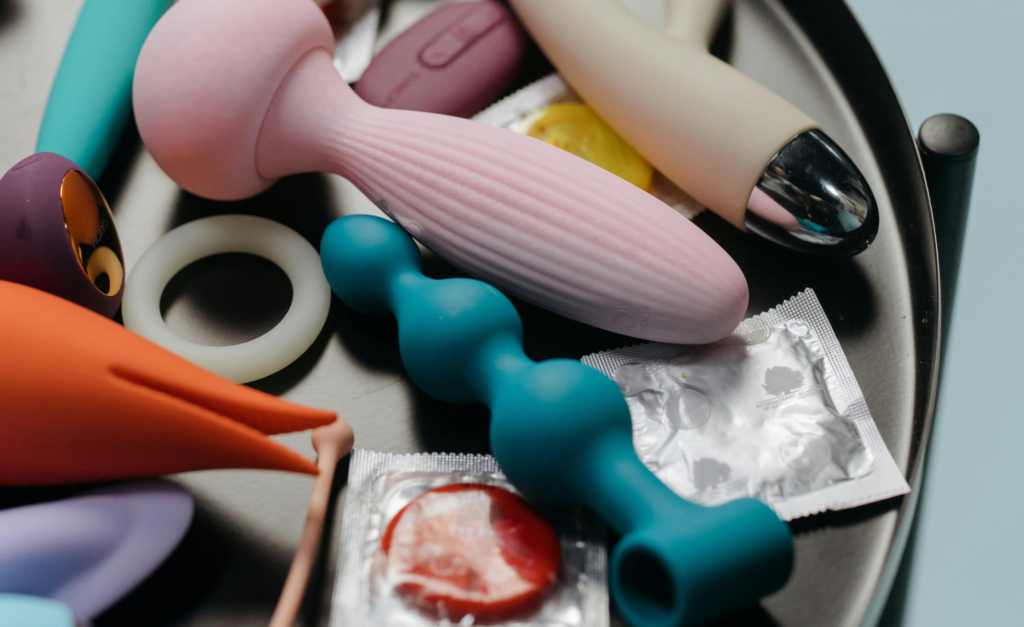
Eco-minded sex is better for you and the planet. Consider G- (for “green”) rating your most intimate moments. (Photo: Cottonbro studio via Pexels)
A condom wrapper tossed in the trash. A collection of sex toys replaced too often. Long hours spent watching porn. All are practices with an environmental impact. The good news? You can integrate sustainability into intimacy. Try these five Earth-friendly tips.
This article was written in partnership with Club Sexu, a non-profit organization specializing in sexuality-related education and content.
1. Use non-toxic sex accessories
Many sex toys contain phthalates, chemicals that make plastics flexible and harder to break. While handy under the sheets, these chemicals can harm the environment and human bodies.
Studies show phthalates can disrupt the body’s hormone-regulating endocrine system and cause fertility and developmental problems in people with high levels of exposure. As a result, places including Australia, Canada, China, the European Union, Japan and the United States have restricted or regulated some phthalates.
Regardless of what your sex toys are made of, there are ways to reduce their environmental impact:
Take care of your sex stuff
Reducing your consumption remains the most effective way to lower your environmental impact. When it comes to sex accessories — from toys to condoms to lubricants — extending their lifespan matters.
Keep toys clean and store them safely and hygienically away from heat, light and moisture. Read product information for details or consult a sex expert. Sex shop staff are often knowledgeable — ask questions!
Store lubricants and condoms in a cool, dry place. Avoid exposing them to heat, sunlight and moisture. These conditions can weaken materials and make them prone to failing or breaking. Always check expiration dates to ensure they’re effective and safe to use.
Buy with intention
Although fun costumes or lingerie may be exciting, they have an environmental cost when people buy them for one-time use and either dispose of them or let them collect dust in the back of the closet.
Before purchasing new gear or getups, ask yourself, will I use this again or will I lose interest? If you plan to reuse, choose options that are better for people and the planet, such as ethically made garments crafted from biodegradable materials like cotton or silk.
The same applies to sex toys. Prioritize durable materials like glass, metal, treated wood, silicone or recycled components. (Note: silicone products, while not biodegradable or recyclable, are still a better option than plastic.) Opt for rechargeable products. Support local companies and brands to limit transportation and excess packaging.
When it comes to lubricant, avoid petroleum products, artificial scents, flavours and/or colours. Lubricants, made of organic oils and/or plant-based formulas, are a low-impact choice.
Recycle responsibly
Most municipal recycling facilities won’t accept sex toys. They’re considered a potential biohazard. Instead, seek out dedicated recycling programs designed specifically for these items. Ensure you take time to research programs carefully before participating. Not all claims of sustainability are created equal and transparency matters.
2. Get porn in other forms
Streaming porn videos is estimated to account for 27 per cent of pollution linked to online video consumption. It generates 80 million tonnes of carbon dioxide each year.
Reducing this impact doesn’t mean giving up erotic content. It’s an invitation to diversify how you engage. For example: Erotic literature and audio are far less energy-intensive alternatives.

Want to reduce your digital carbon footprint even further?
Every click, tap and download contributes to your digital carbon footprint. Our lives are increasingly intertwined with technology, so it’s easy to overlook the environmental impact of online habits.
3. Protect yourself while protecting the planet
Condoms remain one of the most effective, recommended and accessible forms of protection. Most are made from latex, derived from rubber trees. It’s biodegradable in its purest form. But most latex condoms include synthetic additives like stabilizers, preservatives and spermicides that can prevent them from fully biodegrading.
Good news! Vegan options without harmful additives are available. If your budget, health and location allow, these are a great lower-impact choice.
No matter which condoms you use, never flush them. Whatever goes into the toilet ends up in the water supply. This harms wildlife, disrupts aquatic ecosystems and can block sewage systems. Don’t try to recycle them as they’ll contaminate other recyclable materials. Put condom wrappers and their used contents in the garbage (away from pets).
4. Lighten the footprint of your contraception
While no contraceptive method is perfect — particularly given their impact on the body and the burdens they can represent — some are more environmentally friendly than others.
Hormonal and copper intrauterine devices (IUDs) generate little waste. In terms of permanent contraception methods, vasectomies are also considered to have a low environmental impact.
Other “natural” methods, such as menstrual cycle tracking (the calendar method), Billings Ovulation Method and the hypothermal method, are less invasive and generate little waste.
Reusable barrier methods, such as cervical caps and latex diaphragms, are also environmentally friendly options designed for extended use.
If you prefer the birth control pill, avoid throwing expired pills in the trash or toilet. Instead, return them to your pharmacy to prevent pharmaceuticals from entering wastewater systems and harming ecosystems.
Choosing a contraceptive method comes with challenges and considerations individual to each person. The goal isn’t to make that decision more complicated by adding environmental pressure or shame. The best option will always be the one that works best for you and your body.
Note: Always consult your medical care team to make informed decisions for your health and wellbeing, regardless of the environmental impact.
5. Green your menstrual cycle
A wide range of menstrual products are available that are more environmentally friendly than their single use counterparts. These include reusable menstrual cups, discs, pads, liners, underwear and more.
If these options aren’t right for you, some brands now offer biodegradable — sometimes even compostable — tampons and pads.
Protecting the planet isn’t a fight you can do alone
Reconsidering your consumption habits and sexual practices can meaningfully reduce the environmental impact of your sexual activity.
Exploring concepts like ecosexuality — a philosophy that views Earth as a partner deserving care, reciprocity and respect — can also shift how we think about pleasure, connection and responsibility. Through this philosophy we can prioritize certain materials and see pleasure as relational rather than something to be consumed.
Still, individual choices can only go so far. Lasting change requires systemic change: better wastewater treatment solutions, less polluting contraceptive options and improved recycling systems for materials commonly used in sexual wellness products.
Until then, keep having fun — and showing the planet some love, too.