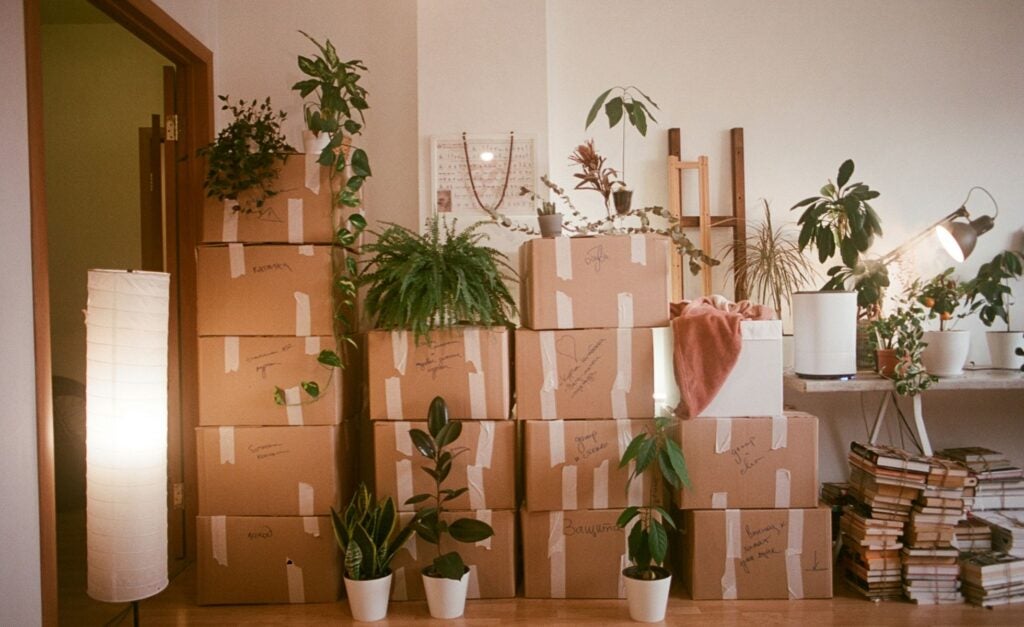
Moving smarter and greener leaves a lighter impact on the planet. (Photo: Dina Badamshina via Unsplash)
Moving your home or workplace can be exciting. But the average move generates dozens of cardboard boxes, rolls of plastic wrap and mountains of disposable packing materials that end up in landfills. With a little planning, you can have a greener move — less stress, cost and waste — easier on the planet and your wallet!
Tips for lowering your impact while preparing for your move
The choices you make before your move — what you keep, what you let go of and how you plan — can reduce your environmental impact. This stage is your opportunity to lighten your load, prevent waste and align your move with your values.
1. Reduce what you move
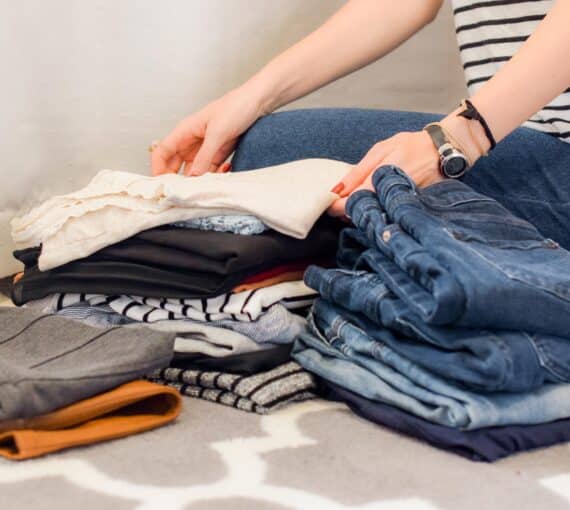
Moving is a great time to take stock of what you need and what you don’t. Every item you move increases the size of the load and the emissions. It also means more packing materials and more trips.
Downsizing your load will require fewer packing materials, a smaller moving vehicle, a smoother unpacking process and an opportunity to donate, share and redistribute useful items in your community.
- Declutter. Go room by room and decide what stays and what can go.
- Donate. Give away items in good condition to local charities, shelters or thrift stores. Join a local Buy Nothing group.
- Host a swap party. Invite friends and neighbours to take what you no longer need. It’s fun and builds community.
- Recycle responsibly. For items you cannot donate or fix, recycle them appropriately. Take e-waste to recyclers or municipal collection points. Drop off household hazardous waste at a depot with a hazardous waste collection program.
2. Plan for a sustainable move
Whether you’re moving across the city or the continent, how you plan your move can make a big difference in its environmental impact. Choose low-emission options. Rent instead of buy. Share resources.
If you’re hiring professional movers, research what eco-friendly moving services are available in your region and price range. Ask moving companies whether they:
- Use reusable and/or eco-friendly materials (e.g., rentable bins or recycled boxes).
- Operate fuel-efficient or electric moving vehicles.
- Reuse provided packing materials between clients.
- Source packing materials from sustainable suppliers.
- Have environmental certifications or sustainability policies.
If you’re moving yourself, rent, borrow or share instead of buying new:
- Ask neighbours, friends and family if they have moving equipment you can borrow.
- Check your local tool library for moving kits.
- Reserve moving equipment (e.g., dollies, moving blankets, etc.) and services early to avoid panic purchases.
Tip! If you’re using your own vehicle(s) to move, avoid peak times. Moving midday on a weekday can mean less traffic, a more efficient route and fewer emissions.
3. Use what you already have for packing
Most moving materials are designed for one use. Cardboard boxes, plastic wrap and Styrofoam protect belongings for a few hours or days, then end up in landfills.
Use what you already own to:
- Reduce your consumption of single-use items and plastics.
- Keep useful materials out of landfills.
- Save money and space.
If you need boxes:
- Ask friends, family, colleagues, neighbours and/or your local shopkeepers for cardboard boxes or reusable storage bins you can borrow.
- Re-purpose existing containers:
- Luggage (suitcases, duffle bags, backpacks, etc.) are useful for transporting heavy items like books and shoes.
- Reusable totes, bins and baskets are great for moving awkward or lightweight items.
- Laundry baskets and hampers work well for transporting toys, toiletries and pantry goods.
- Dresser drawers can be moved with clothes inside. Secure with a strap or blanket.
For fragile items:
- Instead of bubble wrap and packing peanuts, use soft items like towels, T-shirts, linens and blankets.
- Use towels and dishcloths for wrapping large fragile items such as lamps, mirrors, small appliances and awkwardly shaped breakables.
- Use bed sheets, pillowcases and large linens to wrap large decor pieces.
- Use blankets for protecting TVs, artwork and furniture.
- Slip socks over stemware or tuck inside glasses.
- Use jeans and pants to wrap heavy, sturdy items like kitchenware.
- Newspapers, magazines and junk mail are great for wrapping smaller items and filling spaces in boxes. (Note: Ink may transfer.)
Tip! Roll clothes, linens and towels around the edges and in the gaps of boxes for cushioning.
Tips for lowering your impact after moving
The way you unpack, set up your new space and engage with your community can help you carry your environmental values forward into this new chapter.
1. Unpack with purpose
You’ve made the effort to move with less waste. Now finish strong by closing the loop:
- Return, reuse or rehome moving supplies. Did you rent bins or borrow equipment? Return them promptly so others can use them too — keeping them in circulation and out of landfills. Got leftover boxes and packing materials? Post in your local Buy Nothing groups, neighbourhood Facebook pages or ask around.
- Recycle responsibly. Flatten unusable cardboard boxes and remove non-recyclable tape or labels before putting them in recycling bins. Cardboard that’s too damaged to reuse can often be composted if it’s clean and free of glossy coatings or synthetic inks.
- Save useful materials for future use. Set aside reusable supplies such as paper tape, fabric wraps, twine or small boxes. These can come in hand for storage, future gifts, shipping packages or art projects.
2. Set up for low-waste, low-impact living
Your new space is a great place to start green habits. Take proactive steps early on to make energy efficiency and waste reduction a part of everyday life:
- Clean your new space with green cleaners or make your own.
- Consider improvements that reduce and eliminate fossil fuel use.
- Be more energy efficient.
- Set up a compost station.
- Reduce food waste.
If you must purchase new items:
- Buy second-hand from thrift stores, consignment shops or online marketplaces
- Choose durable, repairable items over disposable alternatives.
- Support local businesses to reduce transportation emissions.
- Look for products with minimal packaging.
- Support suppliers who take responsibility for the life cycle of what they sell.
3. Build community
Did you move into a new neighbourhood? Build connections with your neighbours and local groups to help you feel grounded and supported.
Don’t know where to begin?
- Connect with local environmental groups. Many communities have environmental organizations, community gardens and sustainability committees. Get involved and meet like-minded folks.
- Share resources and knowledge. Offer to share tools, equipment or skills. This build community while reducing the need for everyone to own everything individually.
- Take part in local initiatives. Join community clean-up days, tree-planting events or sustainability workshops. These help you meet people while making a positive environmental impact.
- Support local businesses. Get to know the local farmers market, zero-waste shops and eco-friendly businesses in your new area.

Need more suggestions?
Political and ecological crises can feel overwhelming. Humans are social creatures. Building community can help lift people out of their little worlds and encourage them to be part of something bigger.